


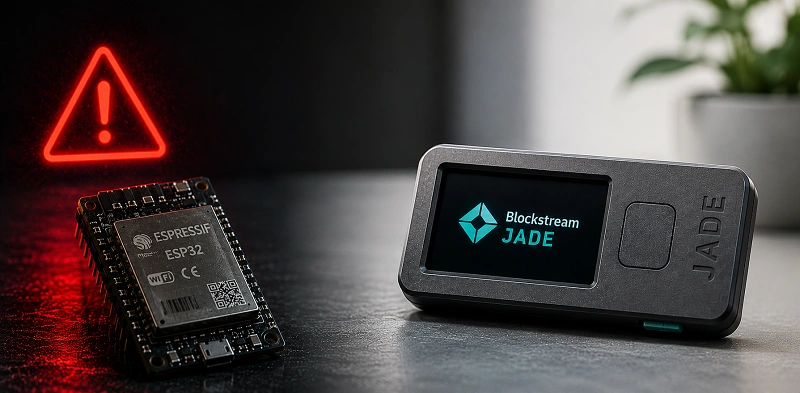
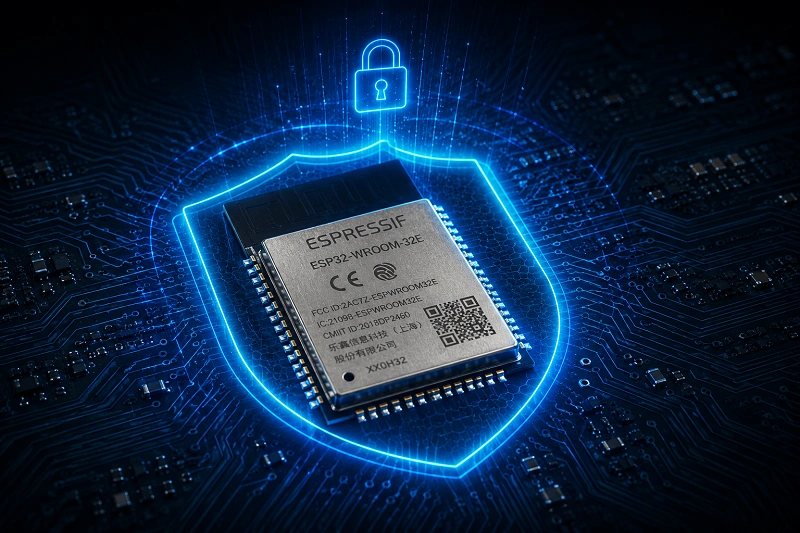
The ESP32 chip powers a wide range of connected devices – from smart home gadgets to certain Bitcoin hardware wallets. In early 2025, reports about undocumented Bluetooth functionality in ESP32 chips raised questions across the security community, including among users of the Blockstream Jade hardware wallet.
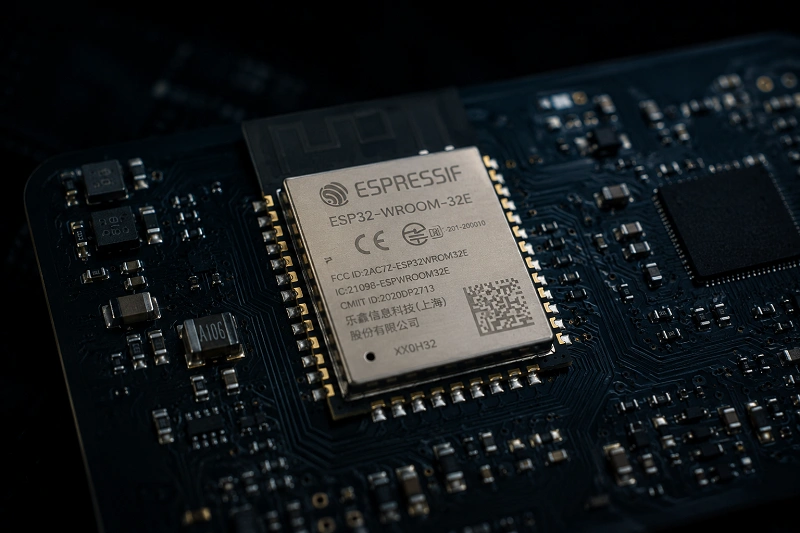
What is the ESP32 chip?
The ESP32 is a family of low-cost microcontrollers (MCUs) developed by Espressif Systems and introduced in 2016. It became widely adopted across IoT (“Internet of Things”) devices due to its combination of integrated wireless connectivity, low cost and flexibility.
In practical terms, ESP32-based chips and modules are found in everything from smart home devices and industrial sensors to hobbyist electronics and – in some cases – Bitcoin hardware wallets such as the Blockstream Jade.
Key reasons for its popularity include:
- Integrated Wi-Fi and Bluetooth: Wireless functionality is built directly into the chip, reducing component count and cost.
- Low-cost and energy-efficient: Suitable for mass-market consumer devices and embedded systems.
- Flexible programmability: Compatible with development frameworks such as Arduino, ESP-IDF and MicroPython.
- Large open-source ecosystem: Extensive documentation, tooling and community support lowered the barrier for developers and manufacturers.
ESP32 security concerns and Bitcoin hardware wallets
Despite its flexibility and low cost, the ESP32 was originally designed as a general-purpose IoT microcontroller rather than a dedicated secure element used in high-security applications.
In early 2025, renewed discussion emerged around ESP32 security following reports concerning undocumented Bluetooth functionality tracked as CVE-2025-27840. The reporting triggered debate within the security community, including among users of devices that incorporate ESP32 components, such as the Blockstream Jade hardware wallet.
This does not automatically mean Bitcoin hardware wallets using ESP32 are insecure.
In practice, hardware wallet security depends on the overall device architecture: how entropy is generated, how keys are stored, whether multiple randomness sources are used, firmware design, transaction signing flows and physical security assumptions.
For example, Blockstream has clarified that Jade does not rely solely on the ESP32 as a randomness source during wallet initialization, but combines entropy from multiple inputs.
The broader lesson is that Bitcoin users should evaluate hardware wallets as complete systems rather than assume security – or insecurity – based on a single component.
Remote attack concerns and wallet security assumptions
One of the main concerns raised around ESP32 security is the possibility that undocumented functionality or implementation weaknesses could increase the attack surface of devices that use the chip, especially where wireless communication is enabled.
For Bitcoin hardware wallets, this matters because the security of the device depends not only on the cryptographic algorithms used, but also on the surrounding system design: firmware integrity, update procedures, user confirmation flows, key isolation and entropy generation.
However, it is important not to overstate the issue. A weakness in a wireless component does not automatically mean that an attacker can sign Bitcoin transactions, extract private keys or bypass wallet approval flows.
For such an attack to succeed, additional weaknesses would usually be required – for example, a compromised firmware update path, poor separation between wireless components and signing logic, or insufficient user verification before a transaction is approved.
In the case of Blockstream Jade, the relevant question is therefore not simply “does it use ESP32?” but how the device architecture limits what the ESP32 component can do, how firmware is verified, and how wallet secrets are protected.
The broader takeaway for users is straightforward: hardware wallet security should be judged at the system level. A single chip can matter, but it does not tell the whole story.
Was there really a “backdoor”?
Early reporting around CVE-2025-27840 used strong language, including claims about a possible ESP32 “backdoor.” That framing was disputed.
The more careful conclusion is narrower: undocumented or poorly documented functionality can increase the attack surface of connected devices, especially where wireless interfaces are enabled. But that does not automatically mean a device can be remotely compromised, nor that private keys can be extracted.
For users of devices such as Blockstream Jade, the relevant question is therefore not whether one component appears in a vulnerability report, but how the full wallet architecture limits what that component can do. Based on the information currently available, the ESP32 controversy does not show that Jade users’ funds are at risk in normal use.
Jade vs Jade+: what is the difference?
For readers considering a purchase, it is worth noting that both the original Blockstream Jade and the newer Jade Plus use ESP32-based architecture. However, Jade Plus upgrades to the newer ESP32-S3 platform and adds several practical hardware improvements, including a larger display, faster performance, improved QR-code handling and expanded connectivity options.
That makes Jade Plus the more comfortable choice for users who expect to use the device frequently, prefer smoother QR-based workflows, or want the latest Blockstream hardware model. The original Jade remains a more compact and lower-cost option for users who mainly want a Bitcoin-focused signing device and do not need the larger screen or upgraded hardware features.
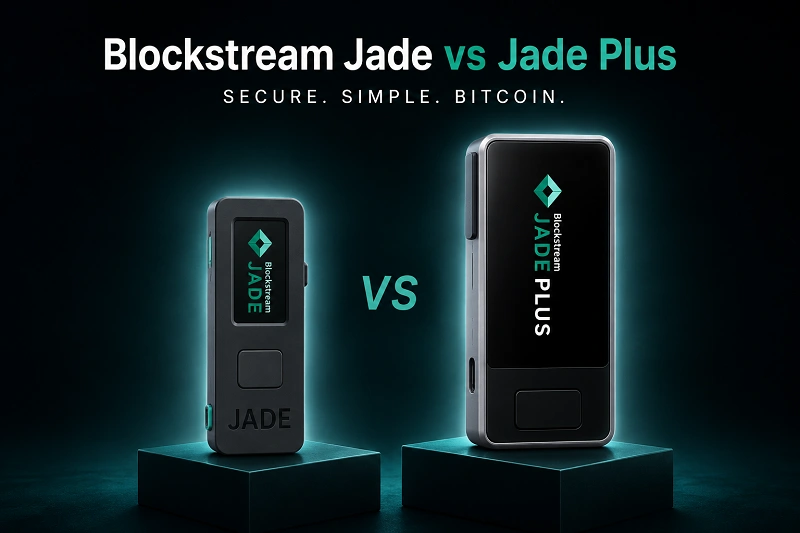
The ESP32 discussion should therefore not be read as “old Jade bad, Jade Plus safe.” Both devices should be judged by the same core question: whether Blockstream’s overall wallet architecture, firmware verification, signing flow and entropy design match the user’s needs.
Importantly, the CVE-2025-27840 discussion concerned hidden HCI commands in the original ESP32 Bluetooth controller. Espressif has stated that ESP32-S series chips – including the ESP32-S3 platform used by Jade Plus – are not affected by those specific commands.
Based on the information currently available, we do not see a practical reason to discourage users from using either Jade model. For most Bitcoin holders, the risk of keeping meaningful funds on a phone, laptop or exchange account is far greater than the theoretical risk described in speculative ESP32 headlines.
Conclusion
The ESP32 is a widely used and capable IoT microcontroller. Its presence in a Bitcoin hardware wallet does not, by itself, mean that user funds are at risk.
The more important question is how the wallet is designed around it: how entropy is generated, how firmware is verified, how signing is isolated, and how clearly users can verify what they are approving.
In the case of Blockstream Jade, the available information does not support the claim that CVE-2025-27840 allows attackers to remotely extract private keys or steal funds in normal use.
The practical takeaway is simple: avoid panic headlines, keep wallet firmware up to date, buy devices from trusted sources, and judge hardware wallets by their complete security architecture – not by one component alone.
Looking to buy a Blockstream Jade hardware wallet in Vietnam?
If you are based in Vietnam and would like to improve the security of your Bitcoin holdings, our colleagues at BitcoinVN Shop serve as an official supplier of Blockstream hardware wallet devices – from the classic Blockstream Jade entry-level model to the more advanced Blockstream Jade Plus for users who prefer a higher-end device with upgraded hardware features.
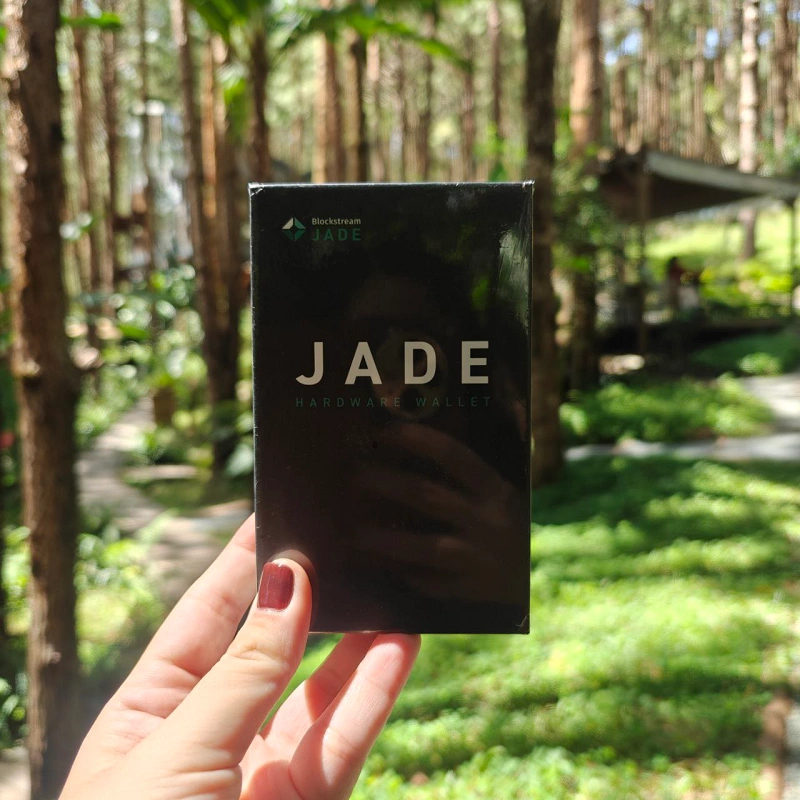
Whether you are setting up your first hardware wallet or looking to improve an existing custody setup, our team can help you find an approach that matches your security requirements and budget.
Looking for more comprehensive CyberSecurity Consulting?
For users with larger holdings, business exposure, inheritance planning needs or more complex operational-security requirements, BitcoinVN Consulting offers 1-to-1 advisory sessions focused on practical self-custody, wallet architecture, cyber hygiene, access control, inheritance planning and broader operational security.
Our team can tailor recommendations to where you are in your Bitcoin journey – from beginners who want to get their setup right from the start to clients thinking about long-term and intergenerational wealth preservation.
BitcoinVN Consulting grew out of real-world operational experience: over more than a decade in the Bitcoin industry, we have repeatedly seen avoidable mistakes, weak setup practices and poor operational security lead to preventable losses.
As such, our team is confident in helping clients build custody and operational-security setups proportionate to their actual risk profile.