


TL;DR: Trezor has confirmed a flaw in the TROPIC01 Secure Element used in the Trezor Safe 7. While the disclosure has attracted significant attention within the hardware security community, Trezor states that user funds, PINs and wallet backups remain protected and no action is required from users.
In early June 2026, Trezor and Tropic Square disclosed a security issue affecting the TROPIC01 Secure Element used in the Trezor Safe 7 hardware wallet.
The issue was identified during an independent security review conducted by Ledger Donjon. Researchers demonstrated a sophisticated physical attack against the chip using specialized laboratory equipment.
While news of a hardware wallet vulnerability may sound alarming, Trezor states that private keys, wallet backups and user funds remain protected. The attack is not remote and would require physical possession of the device, advanced expertise and specialized hardware.
This immediately raised several questions:
- Can attackers steal Bitcoin from a Trezor Safe 7?
- Is my recovery seed exposed?
- Should I replace my device?
- Does this affect other Trezor models?
Let’s take a closer look at what was discovered and what it actually means for users.
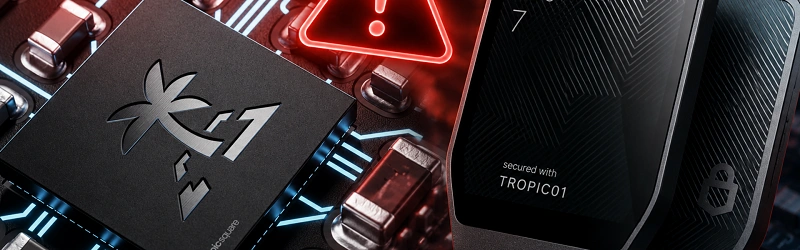
What is TROPIC01?
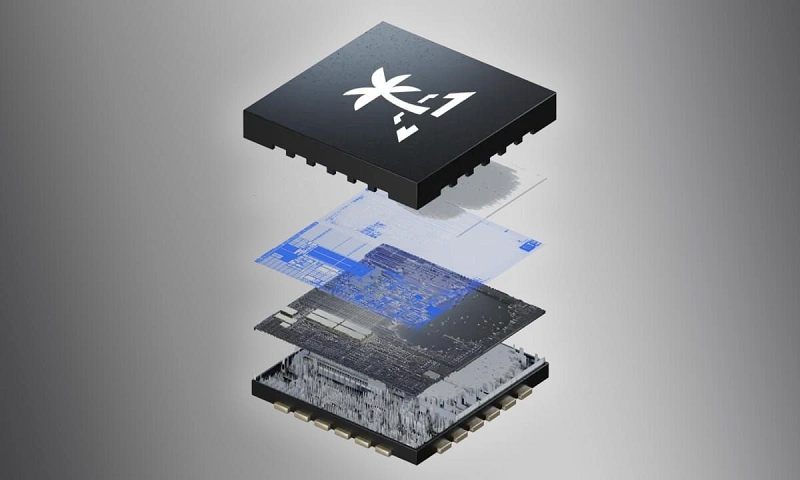
TROPIC01 is a Secure Element (security chip) developed by Tropic Square, a company founded by SatoshiLabs, the team behind Trezor.
Unlike many security chips that are developed under strict confidentiality agreements and largely closed designs, TROPIC01 was created with a strong focus on transparency and independent review.
The project’s goal is to make hardware security more auditable by allowing researchers and security experts to examine, test and verify significant parts of the chip’s design rather than relying solely on vendor claims.
The recent disclosure is also an example of that approach in action: an independent security review identified a weakness, which was subsequently disclosed publicly and addressed by the manufacturer.
How was the vulnerability discovered?
The issue was identified during a security review conducted by Ledger Donjon, Ledger’s hardware security research team.
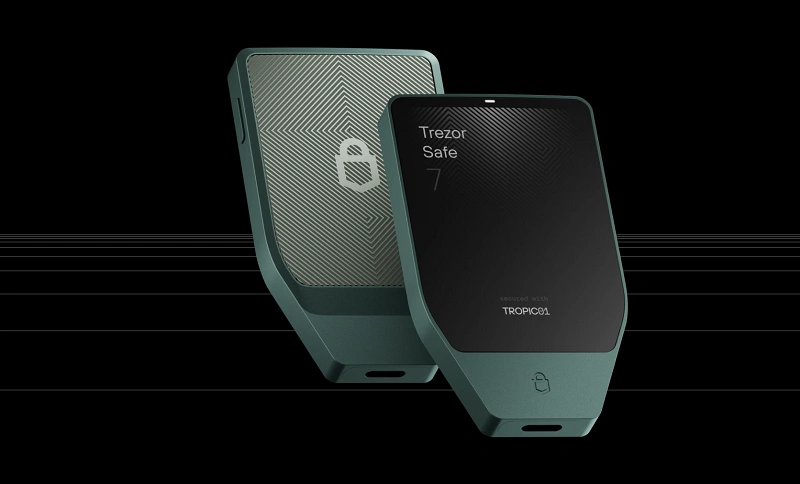
According to the technical report, researchers demonstrated a technique known as Laser Fault Injection (LFI) against the TROPIC01 Secure Element. LFI is an advanced physical attack that uses precisely targeted laser pulses to induce faults inside a chip and influence how it behaves during critical operations.
By doing so, the researchers were able to bypass certain security checks performed during the chip’s startup process.
However, carrying out this attack is far beyond the capability of ordinary criminals. It requires full physical possession of the device, advanced chip-level preparation, specialized Laser Fault Injection equipment and extensive hardware security expertise. Tropic Square estimates that the required equipment alone has an ownership cost of more than €30,000.
While no security measure should be considered perfect, attacks of this nature are generally associated with highly targeted operations against specific individuals rather than the types of threats most cryptocurrency users face in practice.
Users securing very large amounts of Bitcoin often reduce single-device risk further through measures such as multisignature custody setups.
Can hackers get your Bitcoin or recovery seed?
The short answer is: No.
This is perhaps the most important point that many headlines and social media discussions have overlooked.
According to Trezor, the disclosed vulnerability does not allow an attacker to extract a user’s recovery seed, private keys or wallet backup.
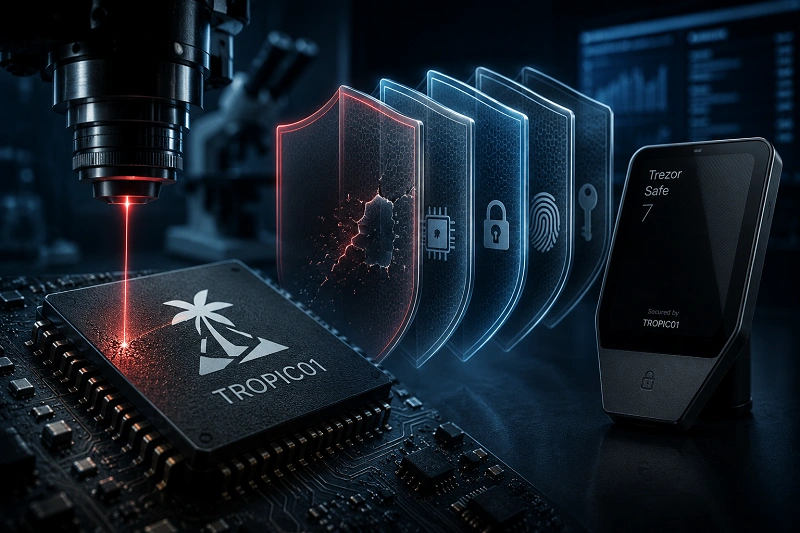
In simplified terms, the Safe 7 does not rely on a single secret to protect access to the wallet. Instead, it uses several independent secret components across different parts of the device.
Ledger Donjon’s attack showed that, with physical access and advanced Laser Fault Injection equipment, researchers could interfere with the TROPIC01 chip during startup and extract information protected by that chip. However, that information represents only one part of the overall authentication system and is not sufficient to recover the wallet, extract private keys, bypass the PIN or access user funds.
In other words, the attack demonstrates a weakness in one security layer, but the remaining layers of the Safe 7 architecture continue to protect the user’s funds.
Why does Trezor still see this as a serious issue?
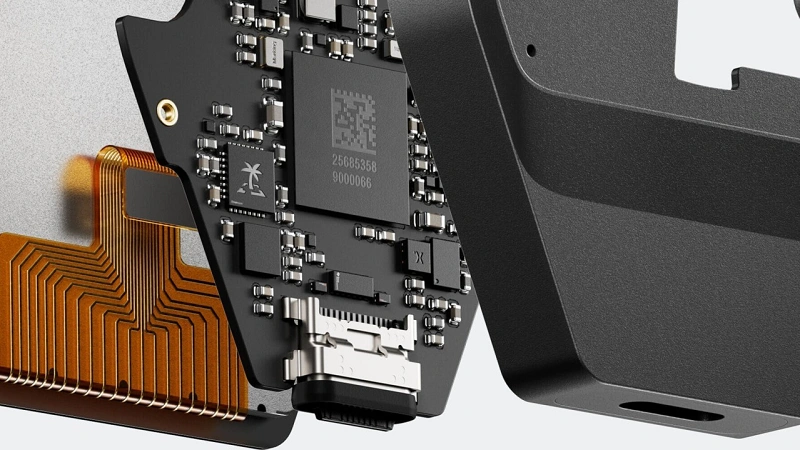
Even though users’ funds are not directly at risk, Trezor considers this an important security finding because the TROPIC01 Secure Element no longer provides the exact level of physical protection it was originally designed to deliver.
From a user perspective, the practical impact may be limited. From an engineering perspective, however, a security mechanism is expected to perform as specified. If researchers discover a way to bypass part of that protection, the design must be improved.
Because this is a hardware-level vulnerability rather than a software bug, it cannot simply be fixed through a firmware update or changes to the Trezor Suite application.
What is Tropic Square doing to fix it?
According to Tropic Square, the findings from this disclosure are already being incorporated into future revisions of the TROPIC01 Secure Element.
Planned improvements include:
- Increased resistance against Laser Fault Injection attacks.
- Additional protections against physical attacks.
- Enhancements to the secure boot process.
- Stronger bootloader security mechanisms.
Because this is a hardware-level issue rather than a software bug, these improvements will be implemented in future silicon revisions rather than through a firmware update.
At the time of writing, Trezor states that no user action is required.
Should Trezor Safe 7 users be worried?
For most users, the answer is no.
While the disclosed vulnerability is technically interesting, it requires physical possession of the device, specialized laboratory equipment and extensive expertise to exploit. The overwhelming majority of cryptocurrency thefts occur through far simpler methods.
The risks most users face today are still:
- Phishing scams
- Recovery seed exposure
- Malware and compromised devices
- Social engineering attacks
- Accidentally approving malicious transactions
If you use a Trezor Safe 7, the most effective security measures remain unchanged:
- Keep your recovery seed secure and offline.
- Use a strong PIN.
- Consider enabling a passphrase for additional protection.
- Purchase devices only from trusted sources.
- Keep your device and software up to date.
For users securing very large amounts of Bitcoin, additional measures such as multisignature custody can further reduce single-device risk.
Conclusion
The TROPIC01 flaw is a genuine security finding, but its practical impact appears limited. The attack requires physical possession of the device, specialized laboratory equipment and significant expertise, making it unlikely to affect ordinary users in practice.
For most users, phishing attacks, malware, social engineering and poor recovery-seed storage remain far more realistic threats than a laboratory-grade hardware attack of this kind.
Trezor Safe 7 users do not need to panic or replace their device. Rather, this disclosure demonstrates the hardware security review process working as intended: a weakness was identified, disclosed publicly and is already being addressed in future chip revisions.