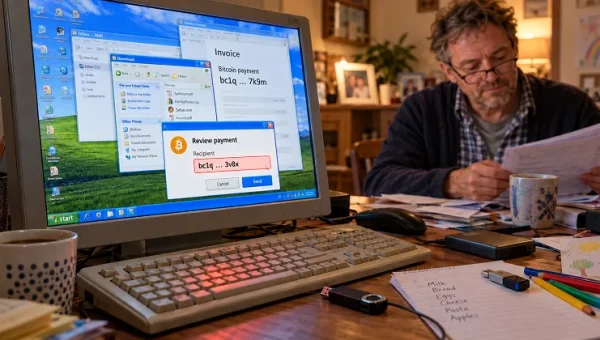

Would you approve a crypto transaction without knowing exactly what it will do? With blind signing, that is effectively what happens – and, over the years, it has contributed to billions of dollars in losses to malicious actors. Clear signing aims to make transaction details readable and verifiable before approval. But how does it work, how much safer can it make crypto transactions, and which tools offer the strongest support for it?
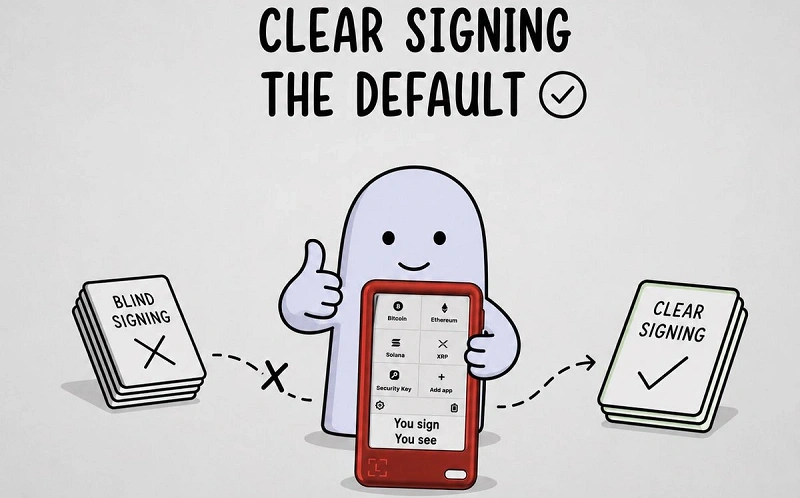
What is Clear Signing?
Clear signing is the practice of presenting the meaningful details of a crypto transaction in a human-readable format before the user approves it. Ideally, these details are shown directly on the trusted display of the wallet or signing device, allowing the user to verify that the transaction matches their intentions.
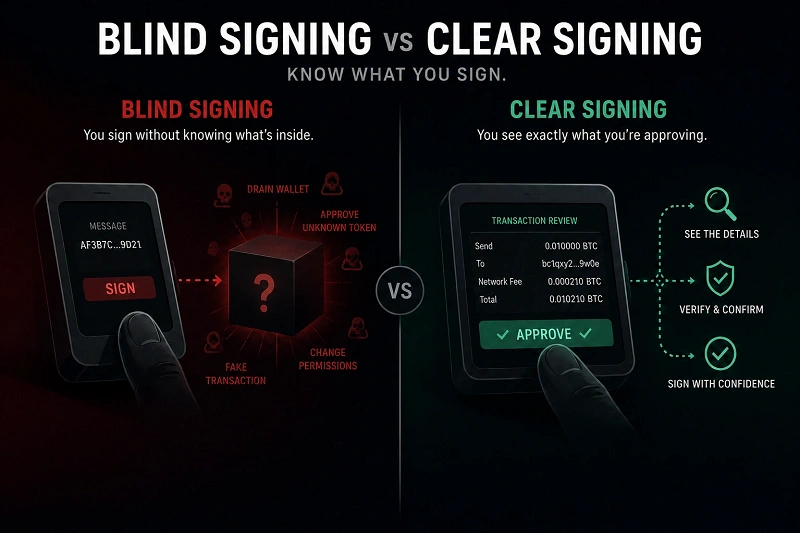
With blind signing, the wallet may instead show technical or encoded information that the user cannot meaningfully understand. The user is therefore asked to approve a transaction without being able to clearly verify what it will do.
In contrast, clear signing should make two key elements easy to understand:
- Clear transaction intent: It shows what action you are being asked to approve and which application is making the request.
- Human-readable details: It presents the essential transaction information in plain language, such as the recipient, the asset involved, and the amount.
The principle is simple: you should understand what you are being asked to sign. By presenting the essential transaction details in clear, human-readable language, clear signing helps users confirm that a transaction matches their intentions and identify suspicious, misleading, or potentially malicious requests before approving them.
Why Is Clear Signing a Critical Line of Defence Against Hackers?
Blind Signing a complex crypto transaction is like signing a blank cheque. You may believe you are approving one action, while the hidden transaction data authorizes something completely different. A malicious website or smart contract could, for example, request unlimited permission to spend a token from your wallet.
Software wallets on internet-connected phones or computers can also be affected by malware or manipulated interfaces. This may cause you to see misleading transaction details and approve something you never intended.
Clear Signing reduces this risk by translating raw transaction data into clear, human-readable information. When used with a hardware wallet, these details are shown directly on the device’s trusted screen, allowing you to verify what you are authorizing before you approve it.
When Clear Signing is used with a hardware wallet that has its own secure screen, raw smart-contract data is translated into simple, readable information and shown directly on the device. Because this display is isolated from the internet-connected phone or computer, malware cannot secretly change what appears there.
This helps you detect suspicious permissions or unexpected transaction details before approving them.
Feature-Rich Ecosystems Come with Trade-Offs
Clear Signing is primarily a response to the complexity of modern smart-contract ecosystems.
Bitcoin, by contrast, generally does not face the same problem because its protocol development follows a deliberately narrower design. Rather than supporting extensive application logic and open-ended token permissions at the base layer, Bitcoin remains focused on serving as a secure, neutral monetary base layer for the world. Its smaller feature set means users generally do not encounter the opaque smart-contract interactions and unlimited spending approvals that make Blind Signing especially dangerous on other networks.

Bitcoin-only applications and wallets therefore expose users to fewer of these attack vectors. This is one reason why many security-conscious Bitcoin users prefer dedicated Bitcoin-only hardware wallets from manufacturers such as Coinkite or Blockstream.
The Future of Clear Signing: Towards a Shared Standard
The modern effort to standardize Clear Signing through ERC-7730 began largely as a Ledger-led initiative. It is now developing into an open security standard that other wallets, applications and security companies can also use.
ERC-7730: A Common Language for Wallets
ERC-7730 is an open standard that gives compatible wallets the information they need to explain complex transactions in plain language. It uses a standardized JSON format, making it easier for different wallets to show users what a transaction will actually do.
Think of it as an instruction sheet. A dApp provides information describing what its transactions do, and a compatible wallet uses that information to show the user something understandable – such as:
Swap 1,000 WMATIC for approximately 554 USDT instead of displaying a long string of unreadable code.
Although already being implemented by wallets and supporting infrastructure, ERC-7730 remains formally listed with Draft status. The proposal has continued to develop through contributions from Ledger and other participants across the Ethereum ecosystem.
This type of standard is mainly relevant for wallet-connected dApps, where the user is asked to sign a transaction interacting with a smart contract. BitcoinVN’s current swap flow is different: users send funds to a generated deposit address or invoice, while the swap itself is handled by BitcoinVN’s backend infrastructure.
BitcoinVN does provide API-based integration options for partner wallets and services, but this is not the same as a smart-contract dApp interaction requiring the user to approve complex on-chain contract logic.
One Parser Instead of Separate Plugins
Ledger released its Generic Parser in 2025.
Previously, supporting Clear Signing for a dApp on Ledger devices usually required a dedicated plugin built specifically for that application. The Generic Parser can instead read ERC-7730 metadata describing what a transaction does and how it should appear on the device.
Developers still need to provide this information for their smart contracts, but they no longer need to build specialised Ledger software for each dApp. This makes Clear Signing easier to add and maintain.
ERC-7730 is an open standard, so other wallet manufacturers can also add support for it to their own products.
ERC-7730 V2
The second version expands the standard to cover more complicated situations, including:
- transactions involving multiple networks;
- both hardware and software wallets;
- privacy-focused and encrypted transactions; and
- more complex smart-contract interactions.
The aim is to make Clear Signing easier to support across different wallets, applications and blockchain networks.
A Neutral Home at the Ethereum Foundation
The Ethereum Foundation now acts as a neutral steward of the ERC-7730 registry and has committed to hosting the supporting infrastructure. The registry itself is publicly maintained on GitHub: anyone can submit transaction descriptions, independent reviewers can check their accuracy, and wallet providers remain free to decide which sources they trust.
Ledger initiated much of the early work, but the project now includes contributors such as WalletConnect, Fireblocks, Trezor, Sourcify, Cyfrin, MetaMask and several other organisations.
Clear Signing is not yet supported everywhere. However, moving the project beyond a single manufacturer gives it a much better chance of becoming a widely adopted security standard across Ethereum and related smart-contract ecosystems.
When Might You Still Be Asked to Blind Sign?
Even as Clear Signing becomes more widely supported, you may still encounter dApps or smart-contract interactions that your wallet cannot explain in readable language.
High-Risk Case: The Transaction Cannot Be Clearly Displayed
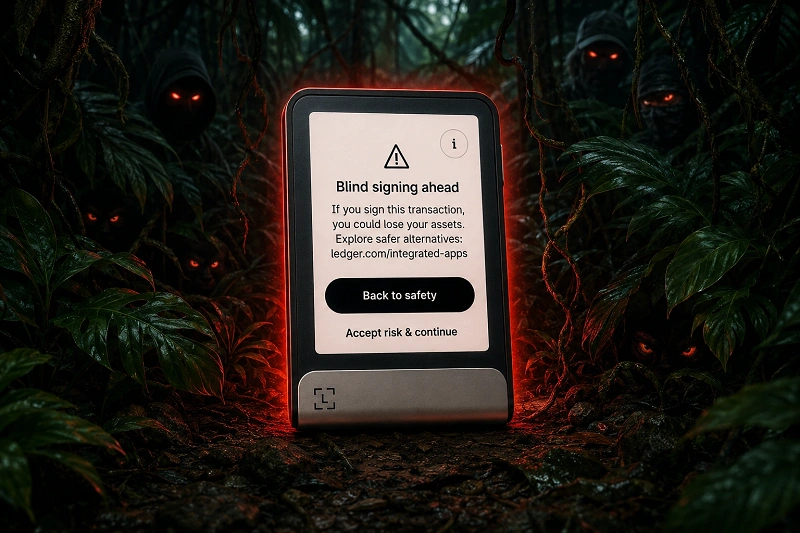
This can happen when the dApp has not provided supported Clear Signing metadata, or when your wallet does not have the parser or integration needed to interpret the transaction. Instead of showing exactly what the smart contract will do, the device may display raw technical data or warn you that Blind Signing is required.
On Ledger devices, Blind Signing is disabled by default in supported blockchain apps. Enabling it allows the device to approve transactions it cannot fully explain, so you should treat the request as a serious warning – not as a routine step.
Survival Guide If You Must Blind Sign
- Use a separate low-value wallet: Keep your main long-term holdings away from experimental dApps and unknown smart contracts.
- Verify the website carefully: Use a saved bookmark or confirm the official domain through trusted sources.
- Avoid links sent through private messages: Treat unsolicited dApp links on Telegram, Discord or X as suspicious.
- Limit permissions where possible: Avoid unlimited token approvals and remove unused permissions after the interaction.
Conclusion: Never Sign What You Cannot Read
Clear Signing shows you what you are authorizing. Blind Signing does not. That difference can determine whether you complete the transaction you intended – or unknowingly give an attacker permission to take your assets.
Blind Signing should therefore be avoided whenever possible. When there is genuinely no alternative, use a separate wallet containing only an amount you can afford to lose. Never Blind Sign with a wallet holding serious savings or long-term investments.
Billions of dollars’ worth of crypto assets are stolen by attackers every year, and unreadable transaction approvals remain one of the most glaring openings they readily exploit. Do not make their job easier.
Once a malicious transaction has been approved, there is often very little recourse – so the best damage control is investing in a proper defensive cybersecurity posture upfront.
Ledger’s current devices—including the Nano S Plus, Nano X, Flex, Stax and Nano Gen5—support Clear Signing. The larger screens on the Flex, Stax and Nano Gen5 make complex transaction details considerably easier to review, while the Nano models present the same information through a smaller, multi-step display. Actual Clear Signing availability still depends on the wallet and dApp supporting the transaction.
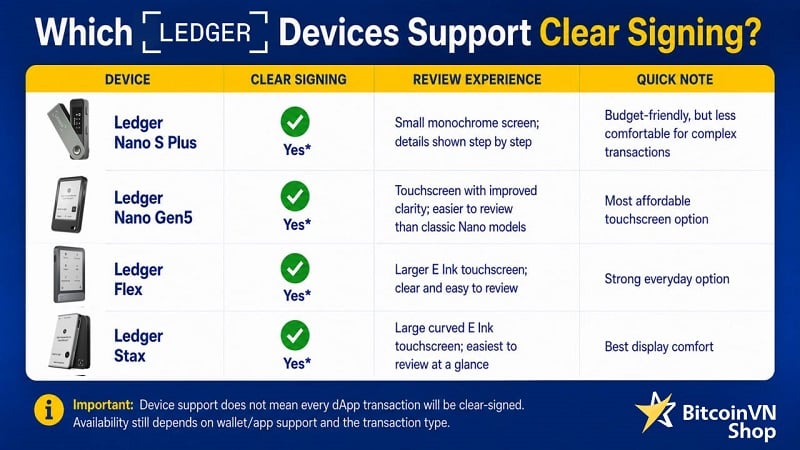
Important caveat
The old original Nano S does not support the newer Clear Signing improvements available on current Ledger devices because of its hardware limitations. It can still handle basic transactions, but it should not be relied upon as the primary device for complex dApp interactions or meaningful holdings. Consider upgrading to a newer model and retaining the original Nano S only as a secondary device for simple, low-value transactions – or as a dedicated decoy wallet containing no more than an amount you are prepared to lose.
If you are looking to invest further in a professional self-custody setup, our experienced team at BitcoinVN Consulting is available for a one-to-one consultation. We can help you establish a professional self-custody strategy designed to avoid the overwhelming majority of common – and entirely preventable – loss scenarios.
Our team does not speak from pure theory, but from practice. More than a decade of survival and daily battles “in the trenches” – securing our own assets, protecting those of our clients and coordinating continuously with leading cybersecurity peers – has given us deep practical experience in what actually works to protect digital assets.