

Since late 2025, the Bitcoin community has been sharply divided over whether to expand or remove the small 80-byte limit on data that can be included in transactions using the OP_RETURN code. This debate centers on potentially allowing up to 100,000 bytes or even unlimited metadata.
This debate echoes the 2017 block-size wars, with experts divided between upgrading Bitcoin and preserving its reliability, and with approximately 60% community opposition shown in recent polls.
This article summarizes the core arguments and presents a powerful, less-technical counter-perspective rooted in social scalability.
Some basic facts about OP_RETURN:
OP_RETURN is a special instruction (opcode) in a Bitcoin transaction script. It lets users embed a small amount of non-spendable data – meaning it’s just information, not money that can be sent or received. Think of it like adding a tiny, permanent note or stamp to a digital receipt.
- The default limit: The current 80-byte cap was put in place to prevent “spam”—to stop people from cluttering the blockchain with massive amounts of unnecessary data that would bloat the size of the chain.
- The problem: Users are already bypassing this limit using complex workarounds, such as Taproot, which can hide up to 4MB of data. This creates network clutter and often benefits large miners who can strike private deals.
Some core arguments from both sides:
|
For Expansion/Removal |
Against Expansion/Removal |
| Standardizes Data: People are already using messy loopholes (like Taproot) for large data. Expanding OP_RETURN offers a safer, cleaner, and prunable way to do it, reducing unseen clutter. | Blockchain Bloat: Allowing huge amounts of data increases storage costs and slows down full nodes, which could lead to centralization (only large organizations can afford to run nodes). |
| Promotes Decentralization: It eliminates the incentive for secret deals between users and big miners, leveling the playing field for smaller players who can now compete transparently. | Legal Risks: It makes it easier for bad actors to embed illegal content (like child abuse material) permanently on the public blockchain, potentially exposing node operators and miners to lawsuits. |
| Enables Innovation: Supports faster, cheaper Layer 2 solutions by allowing them to embed compact cryptographic proofs without inefficient “cramming.” | Erodes Bitcoin’s Identity: Bitcoin is meant to be “sound money.” This shift invites a more spam-friendly environment, encourages corporate influence, and moves away from its core mission. |
| Limits Are Ineffective: Miners prioritize transactions that pay the highest fees anyway. Artificial caps just complicate the network unnecessarily without truly stopping determined users. | Unnecessary Change: Critics argue that spam is currently minimal (less than 1% of transactions) and that market forces (transaction fees) and existing filters already deter abuse effectively. |
Through the lens of Social Scalability:
A less obvious but crucial angle in this debate is social scalability, a concept championed by Nick Szabo and applied by Hugo Nguyen to this matter.
Nunchuk founder Hugo Nguyen argues that Bitcoin’s true strength is social scalability, not just computational speed. He supports letting the market (transaction fees) and Proof-of-Work decide what data gets included, not arbitrary, non-protocol limits.
“OP_RETURN data limit is an example of a naive policy that seems to have worked at a small scale (when the Bitcoin network was a tightly-knit group composed of many close, trusted relationships) that breaks down at a very large scale (huge network with adversarial actors). It does not socially scale.” – Hugo Nguyen, Nunchuk
In Nick Szabo’s 2017 essay “Money, Blockchains, and Social Scalability”, social scalability is defined as the capacity of a system to enable repeated, reliable participation among a growing number of diverse people, even those who don’t trust each other. The Bitcoin blockchain achieves this by minimizing the need for human trust – it replaces fallible institutions (like banks or accountants) with automated, computationally expensive security (Proof-of-Work mining).
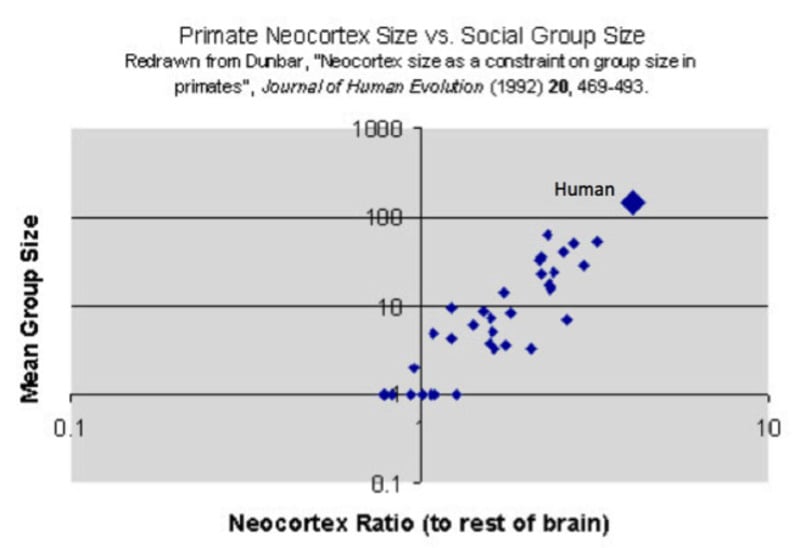
On this basis, he views mempool policies (like the 80-byte OP_RETURN limit) as a weak security barrier. Why? Because they are not secured by the costly Proof-of-Work mining process. They are just software settings that are vulnerable to being bypassed, faked, or ignored by miners.
In the end, the magic comes from one thing: expensive Proof-of-Work. Anything not secured by PoW is a “soft” rule that clever people will route around. The 80-byte limit is exactly that kind of soft rule – just a default setting in Bitcoin Core that miners and users already ignore. Therefore, let fees and hashpower decide what belongs on-chain; everything else is pretend security.
While often heated, this ongoing debate is a testament to the transparency and rigorous scrutiny applied to any proposed change to Bitcoin, a $2+ trillion decentralized network and growing. Whatever side wins, any modification must strive to achieve majority consensus while preserving the fundamental properties that make Bitcoin the most valuable and resilient public blockchain.