

The Lightning Network is considered one of the most widely adopted solutions to Bitcoin’s scalability problem, allowing millions of fast, low-fee transactions to be processed without needing confirmation on the main chain.
However, using the Lightning Network remains quite complex for most users.
In the original article posted on the Breez Technology blog, Roy Sheinfeld – co-founder of Breez – introduced a new concept: the Lightning Service Provider (LSP). This is an intermediary model that makes it easier for users to access Lightning while preserving Bitcoin’s core decentralization.
Lightning Network: Great potential, difficult access
The Lightning Network operates by opening payment channels between nodes in the network.
Two people can send money back and forth within this channel almost instantly and with near-zero fees. When finished, only the final transaction is recorded on the main chain (on-chain).
In theory, it’s a clever design. But in practice, new users face several technical barriers:
- They must run a Lightning node or connect to another node.
- They need to open channels to send and receive money.
- Crucially, they must have “inbound capacity,” that is, the ability to receive funds from others within the channel.
Without a clear understanding of this mechanism, users can easily get “stuck,” for example, they might have funds in their wallet but be unable to receive more because the channel lacks sufficient inbound capacity.
LSP – The missing piece to make Lightning mainstream
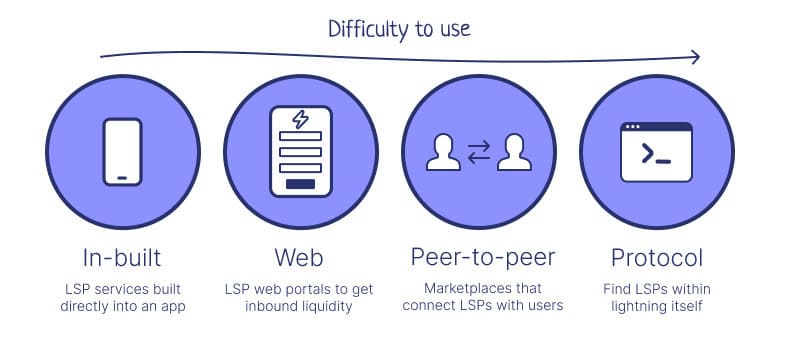
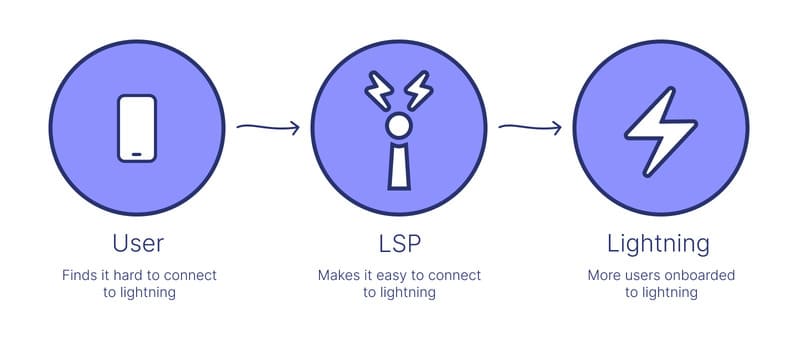
The Lightning Service Provider (LSP) is designed to address those exact barriers.
An LSP is a dedicated node or service that assists users with:
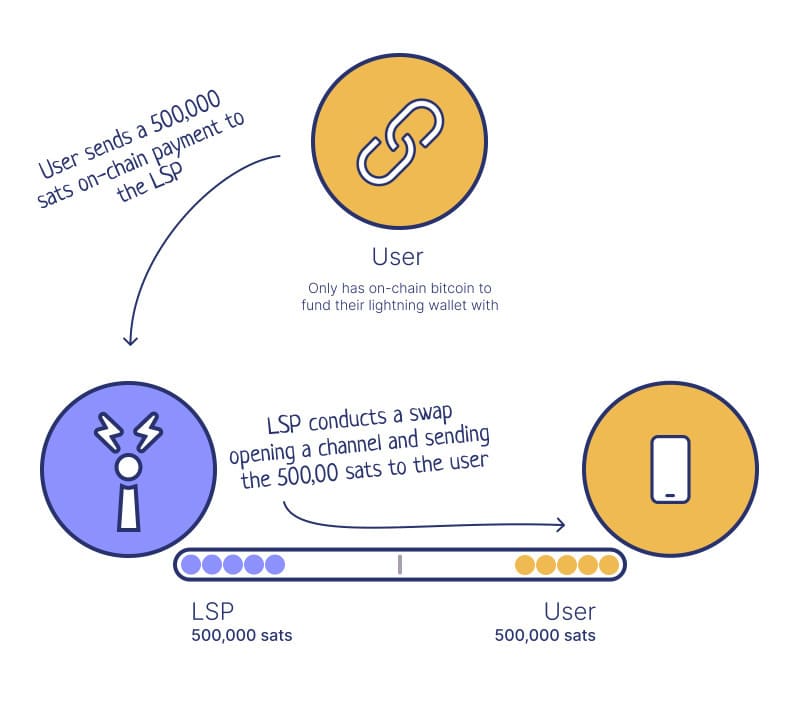
- Automatically opening Lightning channels when a new user joins.
- Providing inbound capacity, ensuring the user can receive money immediately.
- Efficiently routing payments, making transactions faster and more reliable across the network.
- Rebalancing channels when the flow of payments becomes uneven.
- Monitoring and maintaining high uptime, ensuring a smooth experience similar to traditional financial applications.
In other words, the LSP acts as the “Internet Service Provider” in the Lightning world. It does not change the protocol, but simply makes it much easier to use.
How Breez implements the LSP model
Breez is one of the first Lightning wallet applications to integrate the LSP model. When a user installs Breez, the application automatically connects to the Breez Hub, which functions as an LSP.
As a result, users can:
- Receive and send Lightning payments immediately after installation.
- Avoid needing to understand channel opening or liquidity management.
- Experience the Lightning wallet exactly like a regular Bitcoin wallet.
However, the crucial point Breez emphasizes is: the LSP does not compromise decentralization. Users are completely free to:
- Choose a different LSP.
- Run their own node.
- Or even become an LSP serving others.
This model fosters a competitive LSP ecosystem, rather than relying on a single “central hub.”
Balancing convenience and autonomy
The author of the article acknowledges that introducing LSPs into the system might cause many people to worry: “Will this make Lightning more centralized?”
However, he argues that centralization only occurs when users have no choice. In the model proposed by Breez, anyone can become an LSP, from businesses and exchanges to individual users.
As a result, the network will have multiple independent LSPs, creating a competitive, distributed system that is difficult to centrally control.
Significance for the future of the Lightning Network
The LSP model helps bridge the gap between everyday users and Bitcoin technology.
Users no longer need to deeply understand nodes, liquidity, or rebalancing. They just open the app and use it like a regular wallet.
This opens up the possibility for:
- Broader real-world usage of the Lightning Network.
- Instant, extremely low-cost transactions in daily life.
- Global payment services without the need for banks or traditional intermediaries.
Breez believes this model will play a role similar to that of ISPs (Internet Service Providers) for the Internet in the 1990s – the period when the Internet became widely popular because service providers made it easy for users to access without needing to understand the underlying technology.
Conclusion
The Lightning Network is a major advancement for Bitcoin, but only when the user experience is simplified can the network truly achieve widespread growth.
Lightning Service Providers (LSPs) are precisely the solution to achieve this. They both make it easier for mainstream users to access and preserve the spirit of freedom and decentralization that is the core of Bitcoin.
(Based on the original article by Roy Sheinfeld, “Introducing Lightning Service Providers,” published on the Breez Technology Medium blog: https://medium.com/breez-technology/introducing-lightning-service-providers-fe9fb1665d5f)
Lightning Service Providers in Vietnam / Southeast Asia
At BitcoinVN, we recognized the potential of the Lightning Network early and began collaborating with Albert Buu of Neutronpay in 2019.
The potential and trajectory we saw unfold resulted in BitcoinVN deciding to lead an initial seed investment into Neutronpay (now: Neutron), which has since turned into the leading Lightning Service Provider in East Asia.
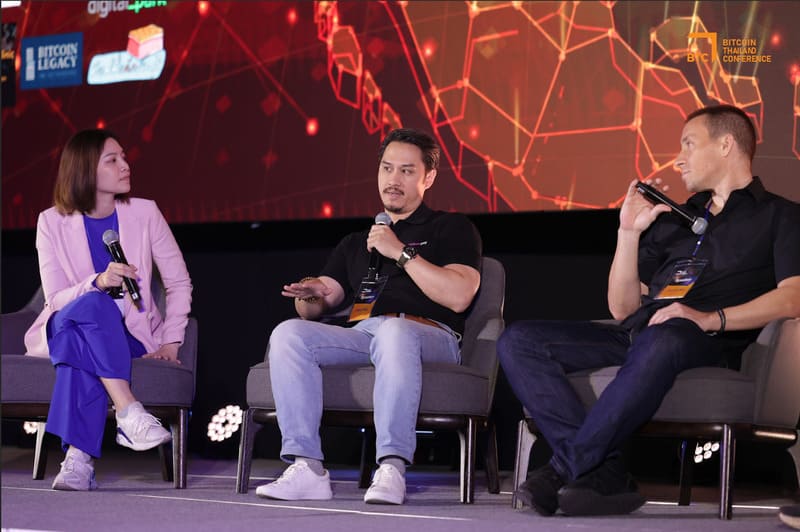
If you’re interested in integrating Lightning through Neutron, you can review their API documentation here, or reach out to their team directly to explore partnership opportunities.
Connect with BitcoinVN Lightning Liquidity
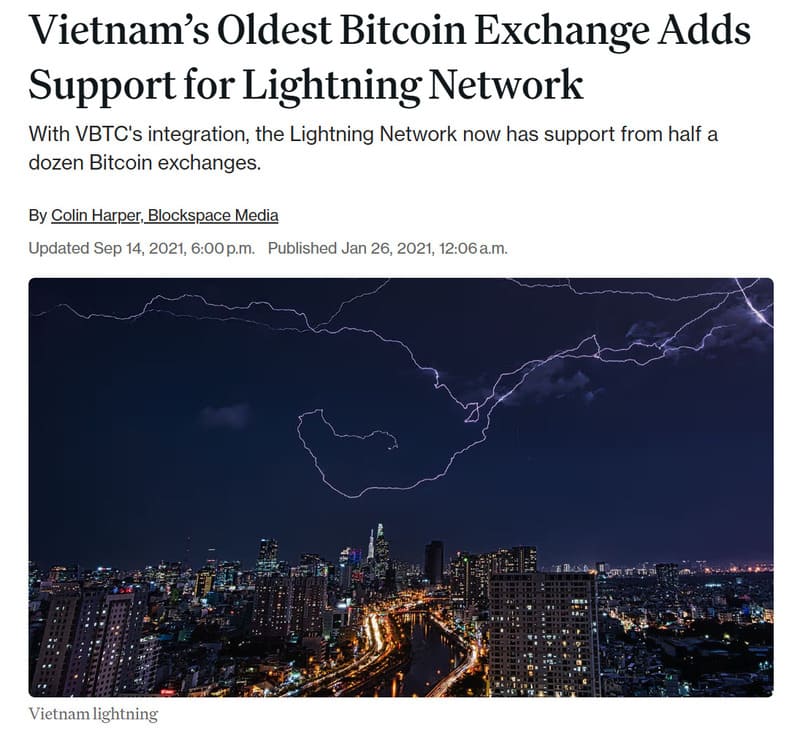
VBTC, Vietnam’s first Bitcoin trading platform, became the first exchange in Asia to roll out Lightning withdrawals in 2021 – ahead of Asia-originating global giants such as Binance and OKX.
BitcoinVN operates one of the largest Lightning routing nodes in Asia.
You can peer and open channels with our routing nodes here:
BitcoinVN 22 – TOR routing node
BitcoinVN25 – Clearnet Routing Node
—-
Further reading:
BitcoinVN – Lightning Network stress test August 2025