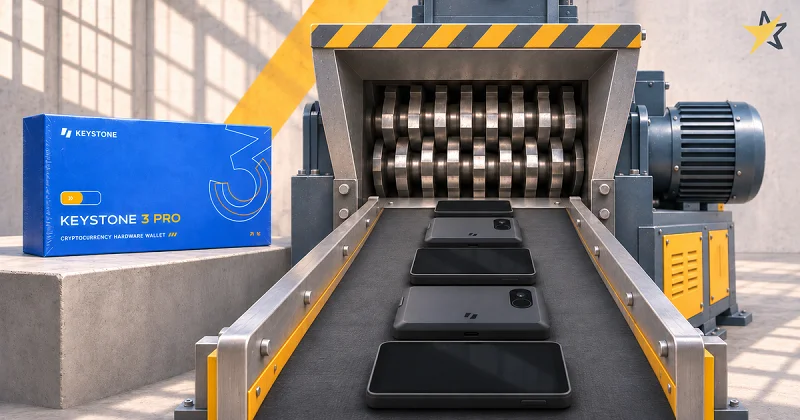
In October 2026, hardware wallet manufacturer Keystone announced that it would destroy 18,835 devices held in inventory following a security breach. Based on Keystone’s disclosure, there is no indication that this breach compromised existing genuine Keystone wallets or exposed users’ recovery phrases or private keys.
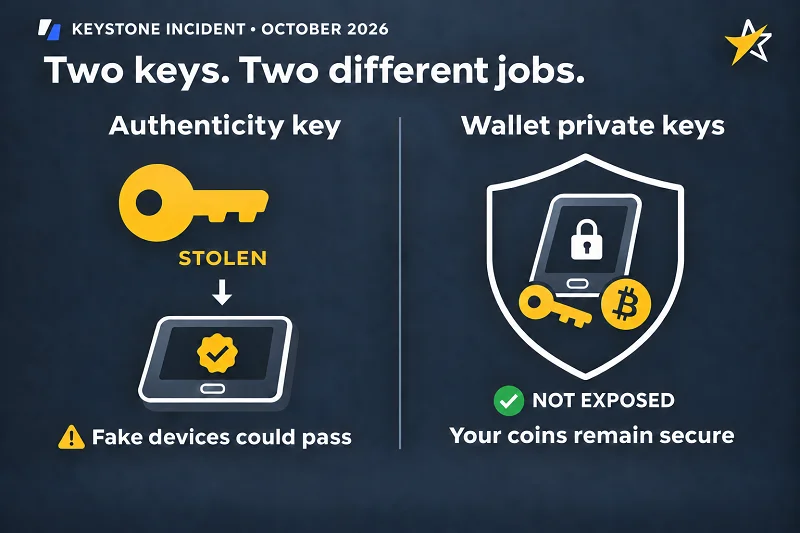
The device-related compromise concerned the WebAuth key used to verify whether a device is genuine. This key is not involved in generating recovery phrases, deriving private keys or signing transactions. Its theft therefore did not, by itself, give attackers access to funds held on genuine devices.
However, possession of that key could allow counterfeit devices to pass Keystone’s authenticity checks. Keystone said the key could not be rewritten on existing devices, prompting the decision to withdraw the affected stock and manufacture new units with a replacement key. Customer information was also exposed in the breach.
As such, if you procured your genuine Keystone device from a trusted authorized supplier rather than directly from the manufacturer, you are safe from both potential issues.
Put simply: if you gave Keystone your name, address or contact details directly through its online store, those details may have been leaked.
If you bought your device through BitcoinVN Shop, authorized reseller of Keystone devices in Vietnam, the personal details associated with that purchase were not exposed in this leak. People who entered their personal details into Keystone’s own online store are potentially affected and should watch for scam messages using those details.
Taking responsibility when things go wrong
Keystone’s decision to earmark 18,835 devices for destruction was a substantial precaution. Those devices contained the old authentication key, which could not be replaced on existing units. The company therefore announced that it would stop shipping affected inventory and manufacture new devices using a different key.
For customers, the important point is that this decision addressed the risk of counterfeit devices passing verification. It was not a finding that thousands of genuine wallets had suddenly become capable of leaking their owners’ private keys.
The response also raises another question: when something goes wrong, who pays to put it right?
As we noted in our statement on 28 October, our experience with hardware wallet incidents this year has included stock being withdrawn from sale while reseller partners were left to absorb the loss without reimbursement.
Keystone moved quickly to take responsibility. Alongside its public disclosure and communication with distributors, it instructed partners to seal existing inventory and committed to replacing affected stock one for one. Customer replacements were also to come from the new production batch.
It is worth noting that all Keystone devices supplied by BitcoinVN Shop came from stock manufactured and imported before 20 October 2026. We have no indication that any of these devices were tampered with, and the stolen authentication key does not give attackers access to coins held on genuine devices. Customers outside the precautionary replacement programme can continue using their wallets as before, following the usual security precautions.
This was a notably positive and professional response to the situation. Local resellers invest capital, handle imports and help customers obtain genuine devices in markets where ordering individually from overseas can be difficult. Supporting those partners through an incident helps preserve access to self-custody tools for the communities they serve.
From the perspective of a reseller, Keystone’s disclosure, communication and commitment to covering the cost of replacing affected devices deserve clear credit.
Customers buy hardware wallets to protect their savings. They should not have to buy a second one because the manufacturer failed to protect its own systems. Nor should resellers have to pay twice for stock they can confidently sell. Keystone’s position was clear: customers and resellers should not have to pay for the company’s mistake.
That is a standard we would like to see across the hardware wallet industry.
Current status of Keystone wallet availability in Vietnam
As of 10 November 2026, BitcoinVN Shop – an authorised Keystone reseller in Vietnam – has resumed sales following a joint review with Keystone of the incident and the security precautions for our existing stock.
The review found no indication that this stock, manufactured and imported before 20 October 2026, had been tampered with or was otherwise at elevated risk from the incident. Both parties therefore agreed to lift the precautionary sales hold on this specific inventory.
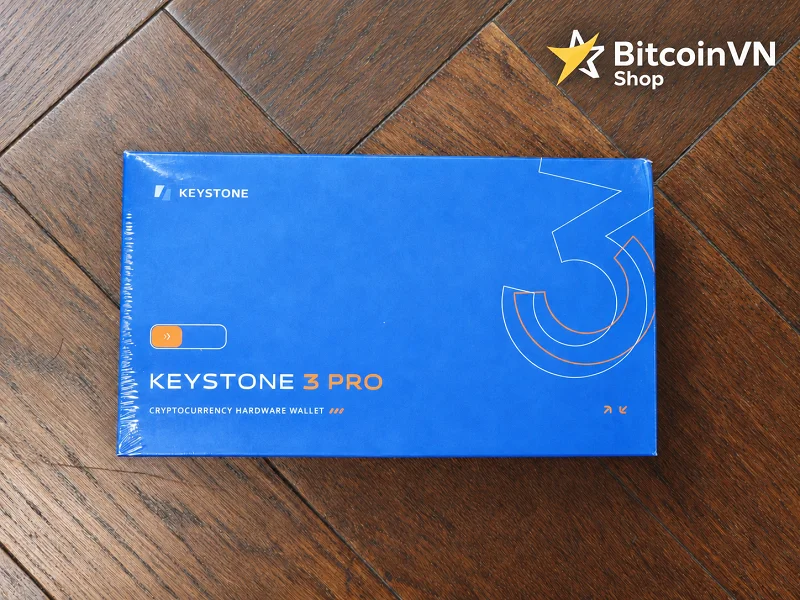
You can therefore order your Keystone wallet from BitcoinVN Shop as usual, with privacy-preserving pickup options available in Ho Chi Minh City and in Da Nang through our showroom partner ₿itCoffee.
For customers elsewhere in Vietnam, nationwide shipping remains available, with delivery to your chosen address usually taking 2–3 business days.
Multivendor Multisig – the go-to solution for larger Bitcoin savings
Ultimately – and as this year has amply demonstrated – it is unwise to rely on a self-custody setup with obvious single points of failure that are actively targeted by powerful threat actors.
We still recommend using hardware wallets for your daily crypto activities. They thwart many common attacks by keeping your keys and seed phrase securely off internet-connected devices. Those attacks often involve compromising your everyday computer or phone in any number of ways – a large attack surface that, combined with increasingly capable AI-enhanced tools, gives criminals plenty of opportunities to “earn a living”.
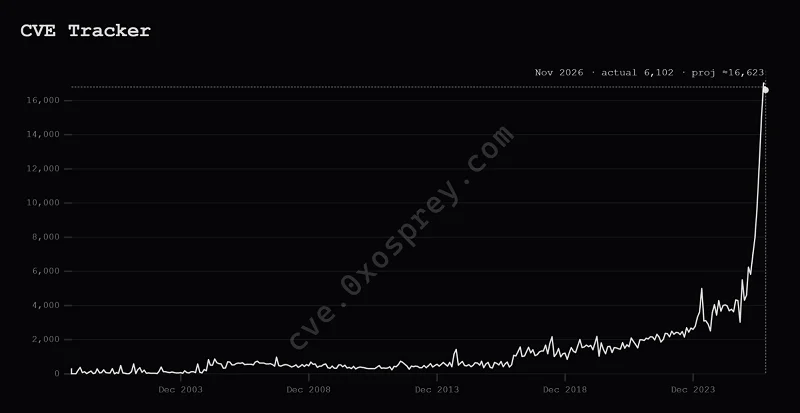
But if compromising one signing key is enough to move all your funds, your setup still has a single point of failure. A hardware wallet helps protect that key; it does not remove your dependence on it.
From weak randomness in the default firmware’s seed phrase generation to sophisticated supply-chain attacks on an industrial scale – this year has demonstrated that various attack vectors on hardware wallets are probed by well-resourced players and dependency on a single device for your life savings is NOT a good idea.
In both cases, users relying on a single-sig setup were left scrambling to move their funds to safety before an attacker could. Those using a properly diversified MVMS setup had more time to respond: a single compromised key was not enough to spend their funds, allowing them to move their funds to a new setup with a replacement key without the same immediate pressure.
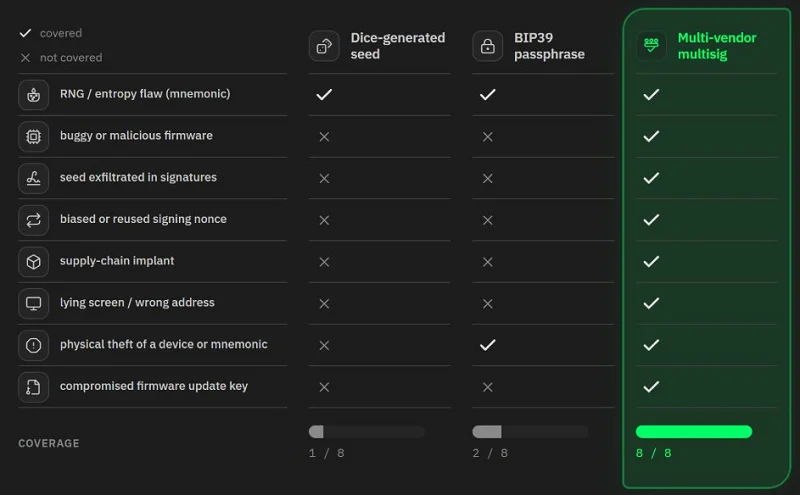
If you allocate – or plan to allocate – substantial savings in Bitcoin, you must give multi-vendor multisig serious consideration.
If you’re considering MVMS, our team can help you review your current position, setup and goals. With more than a decade of experience protecting digital assets against daily threats, we have, by necessity, built substantial frontline experience – and remain “in the trenches” every single day.
If you’ve already decided to move to MVMS, our team can help you set up a well-diversified key structure that minimises reliance on any single party.