
TL;DR: You can provide stablecoin liquidity to the BitcoinVN swap engine at reasonably attractive APR – if you are in a position to risk capital with third parties.
The crypto markets have continued to take a beating this month – even the majors have seen declines of 20% and more versus the ever-inflating “world reserve currency,” the U.S. dollar.
For crypto investors who remained fully allocated throughout the downturn, 2026 has so far been a difficult year.
We are not attempting to predict where markets go next. While periods of maximum pessimism can sometimes mark important turning points, several structural risks remain.
Among them is the continued pressure on a growing number of publicly listed “Digital Asset Treasury” companies whose primary strategy involves raising external capital to accumulate large cryptocurrency holdings. Should funding conditions tighten further, some may ultimately be forced to reduce positions and return assets to the market.
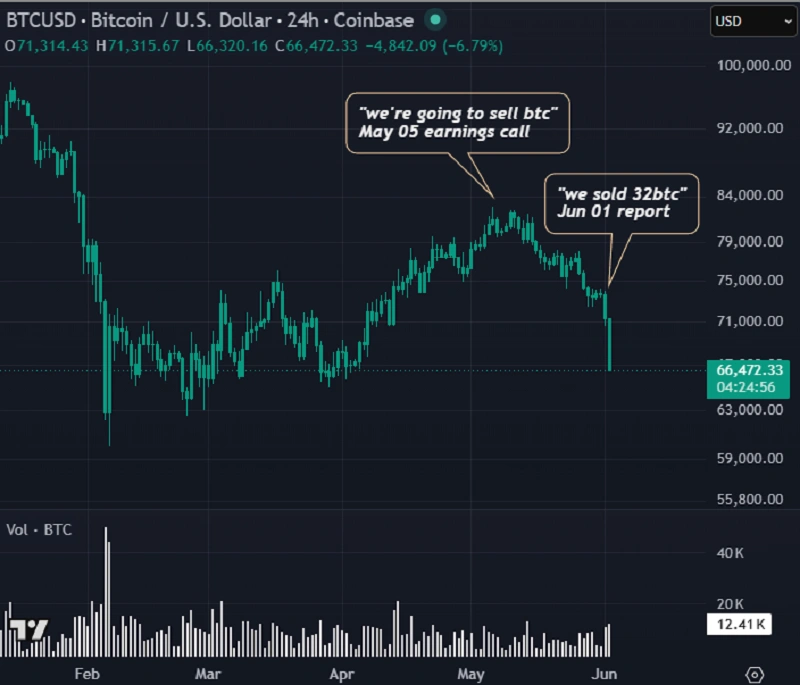
The Strategy “inoculating the market” – Credit: lowstrife
And you’d rather be first out the door than last here if the flywheel starts moving in reverse.
Beyond that, crypto markets face three other AI-related headwinds that may severely constrain upside in the short and medium term:
AI soaks capital out of the room
While Bitcoin and cryptocurrency investors were getting insanely rich during the previous decade by entering the adoption cycle early, both Bitcoin and the broader crypto landscape have matured to a degree where the vast wealth effect of the previous decade is simply no longer available.
You can no longer throw a few thousand dollars of savings into Bitcoin, wait five years, and expect to be set up for life.
Bitcoin may still turn out to be an incredibly valuable store of value and a powerful tool for preserving wealth over the long term. But it is no longer the place where most people look when they want to “make it big”.
If you are young and looking to escape the rat race within the next five to ten years, simply putting part of your paycheck into Bitcoin is unlikely to be the action that changes your life.
This era is gone – and it is not coming back.
…which of course also means that the “hot money” has largely stopped chasing crypto cycles.
Three decades ago, capital and attention were pouring into internet and telecommunications stocks. Today, artificial intelligence and related industries are soaking up both investor capital and attention.
The entrepreneurs, engineers, venture capitalists and speculators looking for the next major growth story are increasingly gathering around AI rather than crypto.
As a result, increasingly mature assets – a category Bitcoin arguably belongs to today – have underperformed while eyeballs and fast money chased sectors perceived to offer greater upside potential.
This does not mean Bitcoin is “dying”.
Nor does it mean Bitcoin cannot continue to outperform many traditional stores of value over the long term.
What it does mean is that Bitcoin has increasingly moved from an asymmetric growth asset toward a wealth-preservation asset.
AI brain & talent drain
While market cycles are temporary and eventually revert to the mean – and are therefore inherently more short-term, emotion-driven phenomena than underlying fundamentals… a more fundamental and potentially “dangerous” shift affecting the crypto ecosystem is the ongoing brain and talent drain toward AI.
If you’re highly driven, highly intelligent and highly capable, where is the most exciting place to be these days? Where are insane amounts of capital being deployed? Where are some of the most ambitious people in the world choosing to spend their time?
For many of those individuals, the answer today is AI.
Crypto may have been the answer for much of the previous decade. Today, like it or not, AI is attracting a growing share of the world’s brightest minds, top engineers, founders and researchers.
Moreover, because talent attracts talent, powerful network effects begin to manifest. Highly capable people generally want to work alongside other highly capable people. They want to exchange ideas, compete, collaborate and learn from peers who challenge them.
And we are explicitly not talking about people taking a gamble with their investment portfolio here. We are talking about the people actually building the technology.
That distinction matters.
While financial capital can move quickly from one sector to another, human capital is far stickier. Once someone has invested years building expertise, networks, reputation and career momentum within a particular ecosystem, they are generally not changing direction every few weeks depending on market sentiment.
The people who truly excel at their craft and rise to the top of their respective fields typically make relatively few major career changes throughout their lives.
And it has to be said:
New, highly talented human capital is increasingly flowing into AI-related sectors rather than crypto.
Even several long-time contributors to the Bitcoin and wider crypto ecosystem have shifted significant portions of their attention toward AI-related opportunities and ventures.
As a result, crypto risks attracting a smaller share of the next generation of top-level engineers, founders and researchers than it did during previous cycles.
That is a far more fundamental challenge than a temporary bear market.
A market downturn may eventually reverse once sentiment shifts.
Lost human capital is considerably harder to recover.
Like a country experiencing a brain drain, an ecosystem that consistently loses a disproportionate share of its most capable people may eventually find its innovation, competitiveness and long-term growth prospects deteriorating.
If the majority of people capable of making a meaningful difference increasingly choose to direct their efforts elsewhere, that is not a particularly encouraging signal for the long-term vitality of the crypto sector.
The AI cyberthreat onslaught
Now to the next – and arguably at least as fundamental – headwind facing the crypto sector.
While AI has made the development of new software tools and the writing of code easier by several orders of magnitude, it also means that attackers are now equipped with tools more powerful than ever.
This clashes with a crypto ecosystem that, over the past decade, often prioritized moving fast and breaking things in the process – treating cybersecurity, well, maybe not exactly as an afterthought, but certainly not with the importance required when we are dealing with millions, even billions, of dollars stored online in flimsy protocols operated by teams with similarly flimsy security setups.
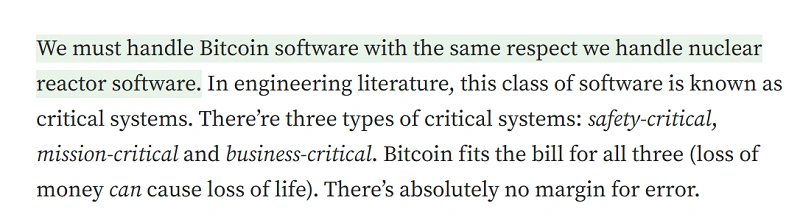
From the classic and prescient 2018 “Proof-of-Stake & the Wrong Engineering Mindset” essay by Hugo Nguyen – founder of Nunchuk Wallet and one of the leading figures in the Bitcoin security engineering ecosystem.
While in the past you could often “get away” with security through obscurity, and attackers needed to spend significant amounts of work figuring out how to exploit weak systems, the landscape here has changed fundamentally over the last couple of months.
There is no longer much obscurity left to hide behind. AI-powered tools will rapidly uncover weaknesses in protocols and services that previously might have gone unnoticed.
If your money is secured in these protocols, you should consider that the risks associated with keeping capital in such systems have increased materially in recent months.
Which, in plain financial terms, means:
If the risk-reward profile of investing in crypto becomes increasingly skewed by a rising probability of catastrophic loss, many of the assumptions investors used to make allocation decisions over the past decade may no longer hold.
As a result, significant portfolio rebalancing across the sector should be expected.
What this likely means is that, over the remainder of this decade, a large part of the current crypto ecosystem will be exploited, flushed out and ultimately disappear. Only a relatively small number of protocols and services that treated security with the seriousness required when safeguarding large amounts of capital are likely to survive.
Another classic essay that foresaw, years ahead of time, what is now rapidly unfolding: “Only the Strong Survive” by Allen Farrington et al. (2021). The full essay can be found here.
Their market share will likely grow as less capital is diverted into weak protocols that fail to survive this new environment. At the same time, capital may remain cautious for a while as the AI-supercharged cyber onslaught continues and confidence slowly rebuilds around what is left standing once these new assumptions are priced in.
Put differently:
There is likely a long-term investment thesis for “simple protocols” such as Bitcoin, which are less exposed to many of the fundamental threats created by AI-powered cyberattacks.
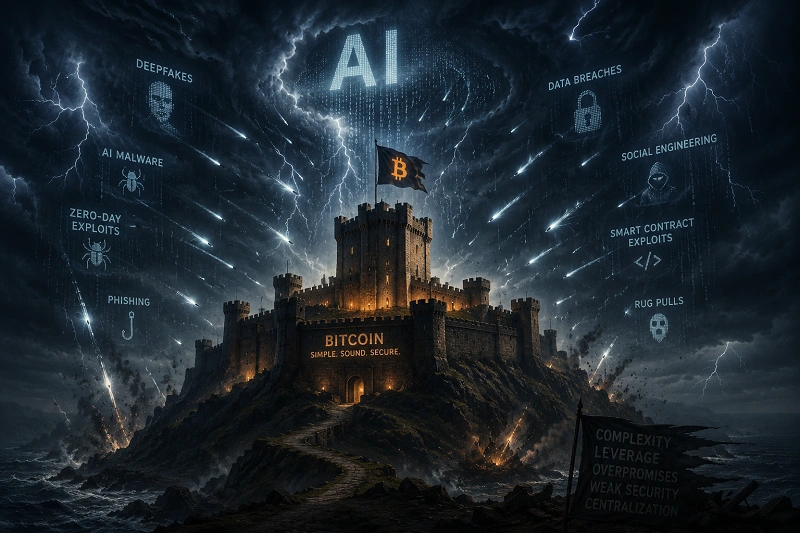
However, if your capital is tied up in some wrapped-staking-DeFi-rehypothecation scheme that relies on multiple counterparties across the chain not getting exploited, you may want to prepare yourself for the possibility of losing that money.
Fortunately, unlike many market risks, cybersecurity risk can often be reduced through proper preparation, sound operational practices and a realistic understanding of the threat environment.
It is one of the few areas where better decisions and disciplined execution can still materially improve your odds.
For investors holding meaningful amounts of digital assets and unsure whether their current setup is appropriate for the threat environment ahead, BitcoinVN Consulting can provide a practical review of your existing security posture and help identify avoidable weak points before someone else does.
Sta(c)king cash with BitcoinVN
To be perfectly clear:
As evidenced by ample reporting on this page over the years, we generally do not advocate holding large amounts of wealth in fiat currency or its close derivatives – including stablecoins and the various IOUs built on top of them.
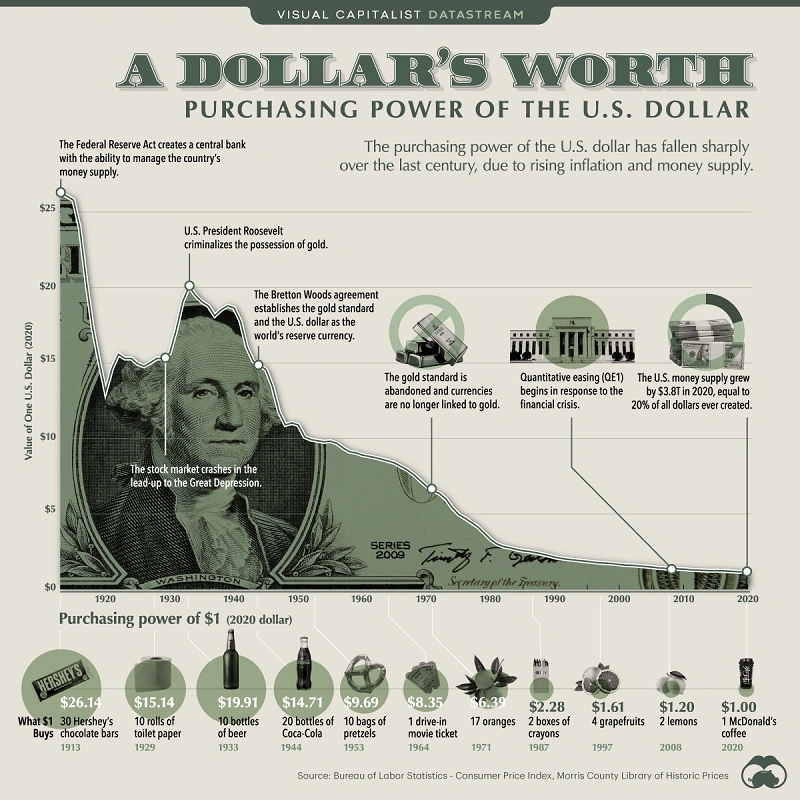
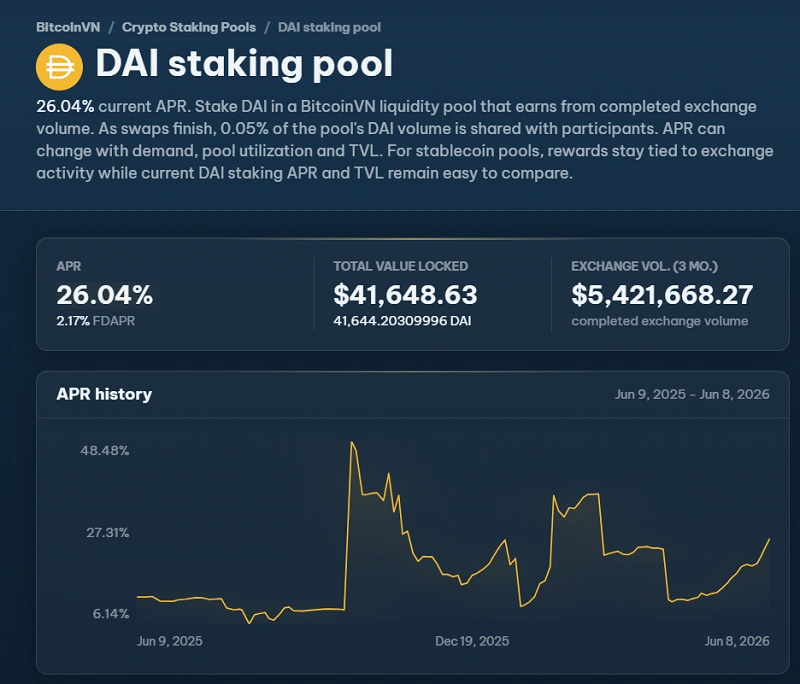
However, if you anticipate further market weakness and are looking for a productive place to park cash reserves in the meantime, BitcoinVN’s staking programs for USDC (a Circle-issued stablecoin) and DAI (a decentralized stablecoin issued by MakerDAO) currently offer yields that compare favorably to many traditional fixed-income alternatives.
That said:
Higher yield generally comes with higher risk.
While BitcoinVN has operated continuously for more than a decade and successfully navigated multiple market cycles, entrusting funds to any third party necessarily introduces counterparty risk.
Even if the operators of BitcoinVN itself continue to act responsibly and prudently, unforeseen events, operational failures, security incidents or broader market disruptions could still impair the firm’s ability to meet its obligations.
If you cannot afford to take that risk, don’t!
If, however, you understand and accept the risks involved, current yields above 20% APR for DAI and above 10% APR for USDC may represent an attractive risk-reward proposition for a portion of your cash reserves.
(Please note the mechanics of the staking pools: the more capital is allocated to a pool, the lower the APR generally becomes, as rewards are distributed across a wider LP base. More details can be found here.)
Additionally, investors can combine staking rewards with an automated DCA strategy without having to manually decide when “a good time to buy back in” is.
Your earned cash rewards simply get continuously allocated back into the market to build up a position at depressed prices.
Sounds simple, is simple – but still requires a basic understanding of what you are doing and the ability to afford the risks involved.
If you would like to learn more about this offering before deciding whether it is worthwhile for you, you can book a session with our Consulting team.
The session is a paid and personalized service and will take your overall situation into account – including your personal learning curve, broader portfolio positioning, and current life stage and goals.
Self-custody – the ultimate solution for your money
Entrusting assets to third parties inevitably introduces counterparty risk.
Unless you can comfortably afford to place funds at risk, we generally encourage investors to consider self-custody.
Properly implemented, self-custody eliminates the custodial counterparty risk that has cost cryptocurrency investors billions of dollars over the years – often permanently and irrecoverably.
That said, self-custody comes with its own set of risks and responsibilities.
If you are not yet familiar with the operational requirements involved, seeking professional guidance can help you avoid costly mistakes and establish sound practices from the outset.
The BitcoinVN Consulting team can assist with both basic and advanced self-custody setups, helping clients avoid common pitfalls, properly back up their seed phrases, reduce single points of failure and build resilience against the threat environment of 2026 and beyond.
For those based in Vietnam who are looking to acquire their own hardware wallet, our colleagues at BitcoinVN Shop provide direct domestic access to genuine devices from Trezor, Ledger, and other reputable manufacturers – without the delays and uncertainties associated with international imports.
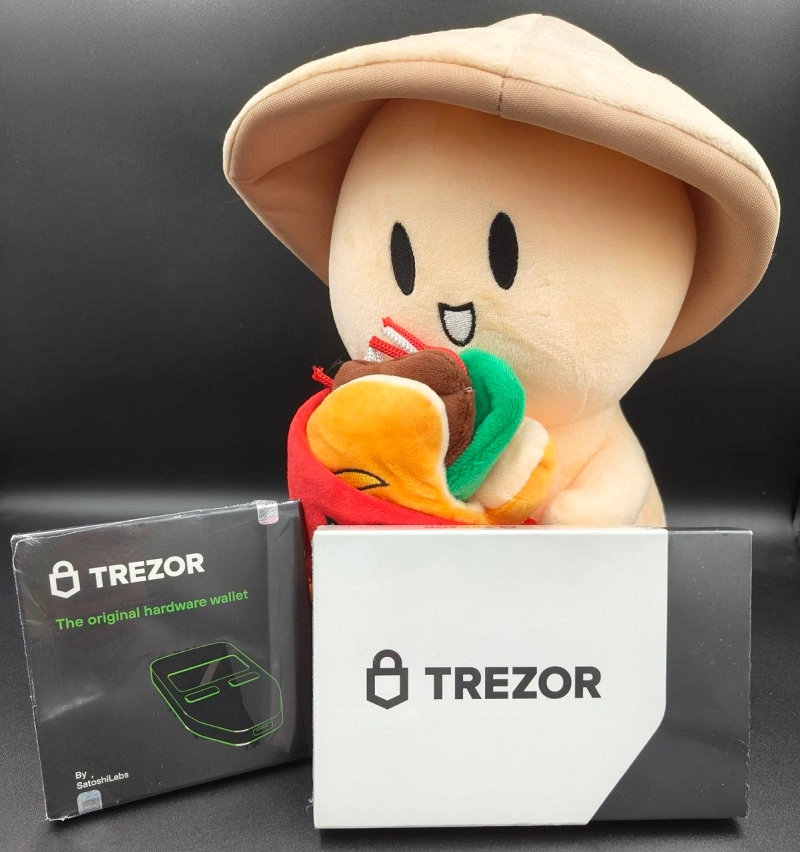
For additional privacy, devices can also be collected directly from our pick-up locations in Ho Chi Minh City and Da Nang, ensuring that sensitive personal information such as your residential address is not unnecessarily linked to a hardware wallet purchase.