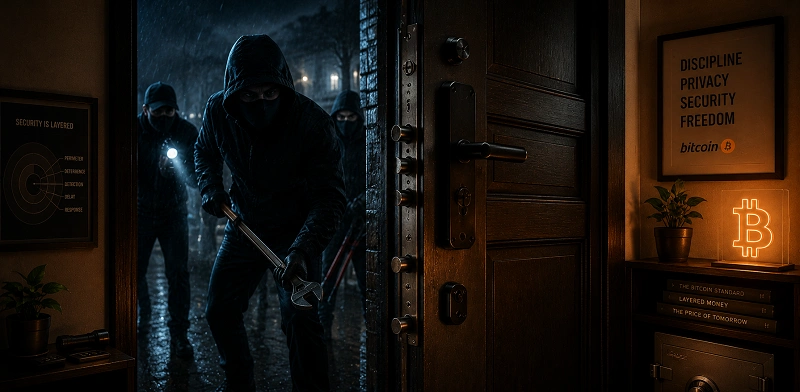
Wrench attacks are emerging as one of the most serious real-world threats facing Bitcoin and crypto holders. Unlike traditional crypto crimes such as smart contract hacks, phishing, malware, or fake websites, wrench attacks happen in real life and directly target people who own crypto.
For years, Bitcoiners have warned that physical attacks on known crypto holders would become more common. Public incident databases and recent reporting now demonstrate that this warning is no longer theoretical. Wider public awareness of Bitcoin and crypto, combined with repeated leaks of customer databases, private address information, and transaction-related records, has given organized criminal groups better target lists than ever before.
The result is a growing wave of robberies, kidnappings, extortion attempts, and home invasions against people believed to own digital assets – especially in jurisdictions such as Western Europe where personal security, policing, or the rule of law cannot be taken for granted.

What are wrench attacks?
The term “wrench attack” comes from a long-running joke in the security world: even the strongest encryption becomes meaningless if an attacker can physically coerce the person holding the password or private key.
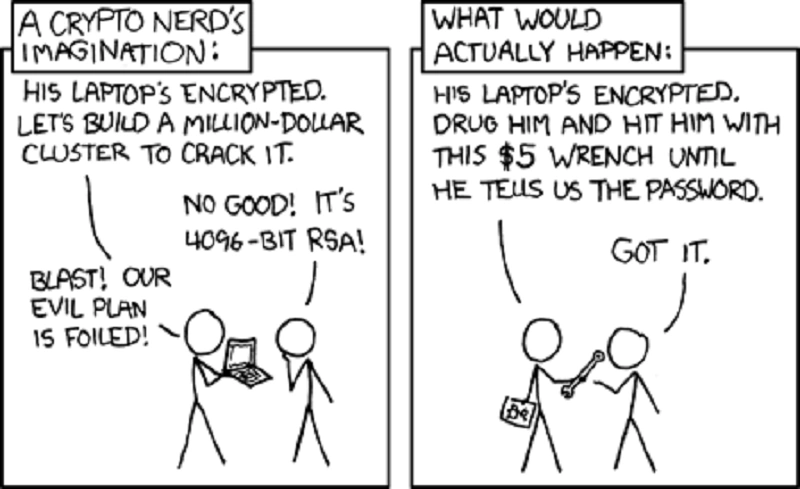
In crypto, this problem is even more serious because users usually control their own funds. There is no bank in the middle, no customer support to freeze transactions, and no “chargeback” system like traditional finance. If someone is forced to send crypto from their wallet, the chances of getting the money back are almost zero.
That is why wrench attacks are becoming more common around the world – especially in countries where limited repercussions for violent criminals create an outsized incentive to target and invade the homes of known crypto holders.
Recent developments in France show how rapidly this threat can escalate. Armed home invasions against crypto holders are now being reported with alarming frequency, following revelations that official French tax office data was sold to criminal networks, helping provide ready-made target lists for violent attacks.

What may once have been a crime of opportunity increasingly resembles a professionalized criminal business model, with clearly separated roles during attacks on crypto holders. In several cases, these operations appear structured, with separate people handling target selection, surveillance, intimidation, entry, and extraction.
For anyone who has publicly disclosed significant crypto holdings, the risk is no longer theoretical. Visibility creates a target.
From armed home invasions forcing victims to unlock hardware wallets, to fake delivery workers gaining access to private homes, to kidnappings where wives, parents, or children become leverage for forced Bitcoin transfers, these cases show where crypto crime is heading: out of the browser, out of the wallet app, and into the physical world.
The evolution and specialization of crypto crime
What makes this trend worrying is that these attacks are no longer random or opportunistic. Crypto crime groups have become much more organized and professional, operating like a full ecosystem with clear divisions of labor.
In the past, many people imagined a hacker as one person doing everything alone: writing malware, finding victims, scamming people, stealing funds, and laundering money. But that model is becoming less common. Just like legal industries in the real world, crypto crime is also becoming more specialized.
And while many Asian countries still punish violent attacks against ordinary citizens swiftly and severely, some Western jurisdictions are sending a very different signal to these groups: crime pays – and pays well.
And if you make the mistake of getting caught in the act, not to worry. In most cases, you may soon be back outside to give it another go.

Today, a wrench attack is rarely just one thug with a weapon acting on impulse. In the more organized cases, which are becoming increasingly common, the operation often involves several layers.
- The masterminds: These are the organizers – the “brains” behind the operation. They compile and review intelligence, decide who is worth targeting, coordinate local teams, finance the operation, arrange logistics, and control where stolen funds ultimately flow. In many cases, they are not physically present and may operate from entirely different jurisdictions.
- The data brokers / intelligence suppliers: These are the people who provide the raw material for targeting. They may sell or leak customer databases, insider information, tax records, addresses, phone numbers, identity documents, travel data, or intelligence gathered from social media and public blockchain activity.
- The local reconnaissance team: These are the people on the ground who confirm the target. They observe routines, verify where someone lives, identify family members, monitor vehicles, building access, daily schedules, and potential vulnerabilities. Their job is to reduce uncertainty before the operation begins.
- The hired muscle: These are the people who execute the physical attack. They may pose as delivery workers, force entry into a home, threaten spouses or children, abduct family members, or force victims to unlock hardware wallets and transfer funds under duress. In many cases, they may know little about crypto itself – they are simply there to apply pressure and follow instructions.
This division of labor makes wrench attacks much more dangerous and effective. The person selling the data does not need to know how to break into a home. The person watching the target does not need to understand Bitcoin. The person kicking in the door does not need to know where the stolen funds will ultimately go.
When each group only needs to specialize in one task, the entire criminal ecosystem becomes far more effective.

Why are wrench attacks becoming so attractive to criminals?
Another reason why wrench attacks are increasing is the huge amount of money now inside the crypto market. In just over a decade, the total crypto market cap has grown from a few billion dollars to trillions of dollars. This means that today, an ordinary person can hold hundreds of thousands or even millions of dollars on their phone or hardware wallet.
For criminals, this creates a very attractive target for several reasons.
Transactions cannot be reversed
Unlike traditional bank accounts, crypto transactions happen very quickly and are extremely difficult to recover. If a bank robbery happens, the money usually moves through a financial system that can monitor or freeze transactions.
But with crypto, once the victim confirms a transaction, the funds can move across different blockchains within minutes and may disappear permanently.
High returns with less effort
From a criminal’s point of view, wrench attacks can be highly profitable because they do not require breaking complex encryption or hacking advanced systems.
They rely on something much older and cruder: the overwhelming application of blunt force.
Instead of defeating the wallet, the attacker defeats the person holding it. The victim is forced to unlock the device, reveal the seed phrase, or transfer the funds themselves – a brutal but proven strategy for taking resources the attacker wants to make their own.
Attacks are carefully planned
Modern wrench attacks are often well organized and carefully prepared. Many groups spend time researching their targets before taking action.
They monitor social media to find people who:
- hold large amounts of crypto,
- publicly show profits,
- attend blockchain conferences and crypto events.
In some cases, attackers also use leaked databases to find the victim’s home address, phone number, and other personal information. Many security experts believe the line between cybercrime and physical crime is slowly disappearing in the crypto industry.
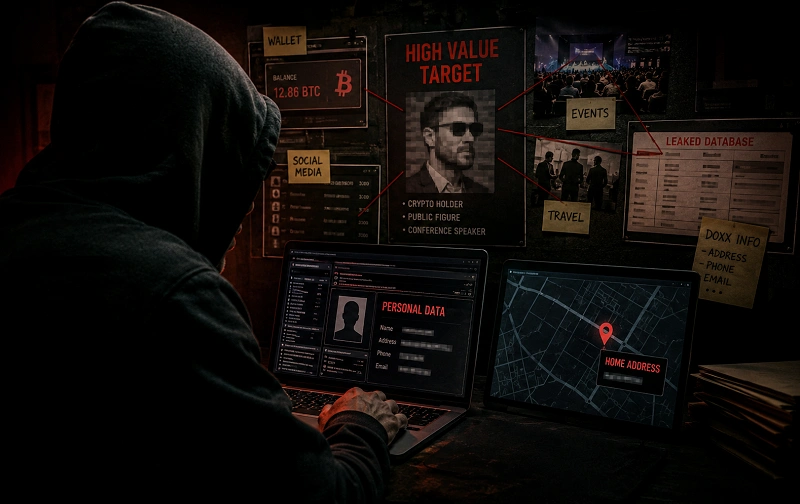
Understanding the real risk and who is being targeted
Not every crypto holder is equally exposed. The main risk factor is not simply “owning Bitcoin.” It is being identifiable as someone worth attacking.
That can happen in many ways: publicly discussing large holdings, appearing on leaked customer lists, posting photos from crypto events, showing hardware wallets online, talking too freely in private groups, or letting too many people know that funds can be accessed from home.
For most ordinary users, basic discretion already reduces a large part of the risk. For founders, whales, traders, brokers, OTC desks, public Bitcoin personalities, and people known to hold significant assets, the calculation is different.
Once your name, face, address, family situation, and perceived crypto wealth are connected, you are no longer just another user. You and your family members are a file on someone’s target list.
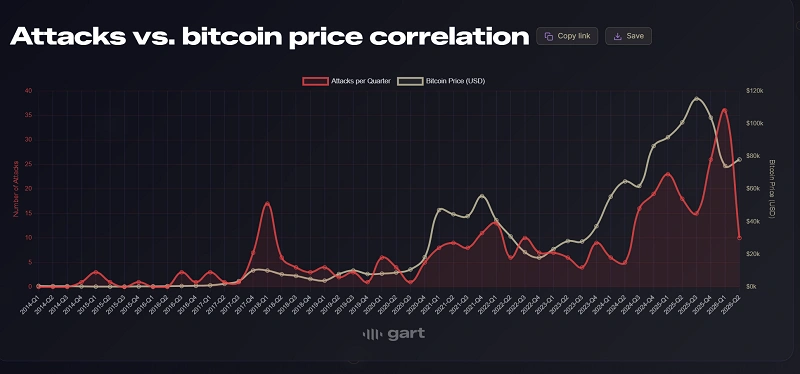
Wrench attacks are in a rampant bull market – Credit: Gart Stats – Database of Physical Attacks Involving Cryptocurrency Since 2014
Still, one thing is clear: the level of violence in these attacks is increasing. Modern wrench attacks are often more organized, more carefully planned, and more willing to use real physical coercion – not only against the holder themselves, but sometimes against spouses, children, or other family members.
The people at highest risk are usually not random crypto users. They are people who are identifiable as holding meaningful amounts of digital assets:
- Founders, executives, OTC brokers, and professional traders
- High-net-worth holders (“whales”)
- Public Bitcoin personalities, influencers, or conference regulars
- Individuals appearing in leaked customer databases or public records
- People who publicly display wealth, portfolio size, or hardware wallet ownership
In crypto, visibility creates risk. Showing portfolio screenshots, posting hardware wallets online, repeatedly checking in at industry events, or casually discussing significant holdings can unintentionally turn someone into a target.
If you have something worth having, assume there are people out there scheming about how to take it the moment they become aware of it.
Full protection means cybersecurity and physical security
For crypto holders, security can no longer stop at passwords, seed phrases, and hardware wallets. A good setup protects against hackers. A complete setup also asks a more uncomfortable question: what happens if someone comes for the person holding the keys?
Do not keep everything one step away from violence
A single wallet with immediate access to all funds is convenient – and dangerous. If everything can be moved in one forced transfer, you are effectively creating a dream scenario for a violent attacker: win once, take everything.
Large balances should be separated by purpose, access level, and time sensitivity. Daily-use funds, business liquidity, long-term holdings, and family reserves should not all sit behind the same device, in the same location, or under the control of the same person.
For anything significant, distributed multivendor multisig should be considered to remove single points of failure.
If this describes your situation – and you are planning to move a meaningful part of your savings into Bitcoin or crypto more broadly – it is worth building the right strategy for your circumstances from the start, with today’s threat realities in mind.
Our team can help you think through custody structure, access control, inheritance planning, and practical operational security before large balances are exposed to unnecessary single points of failure.
With more than a decade of operating experience in this industry, we understand both the technical side of self-custody and the real-world risks that come with holding significant digital assets.
Protect personal information
Protecting personal data is just as important as protecting private keys. Many attacks start from information that seems harmless, such as a home address, phone number, or travel schedule shared on social media.
Your general rule of thumb should be this: once your personal identity is tied to crypto ownership, you must assume that this information will eventually become public – and that it will put you on a target list for violent criminals willing to come after you or your family.
Make privacy and data protection part of your basic risk management stack.
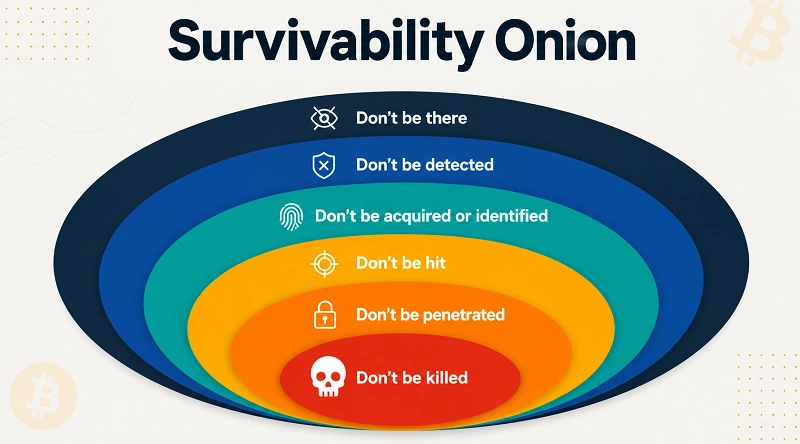
Make physical coercion less useful
The goal is not to “win a fight” against armed criminals. The goal is to make sure one violent moment cannot become full access to your wealth.
Large balances should not be instantly movable from home. Recovery material should not be sitting in obvious places. And one frightened person under pressure should not be able to authorize everything alone.
For higher-risk holders, this may mean multisig, time delays, trusted co-signers, separated locations, access controls, cameras, alarms, and clear family protocols. It also means understanding the role of decoy wallets: not as a magic solution, but as one possible layer in a broader security setup.
Improve physical security
At a certain level, self-custody is no longer only a technical question. It becomes a personal-security question.
For people known to hold large amounts of crypto, cameras, access controls, panic buttons, secure entry routines, vetted domestic staff, and in some cases professional protection are no longer “extreme.” They are part of the same security discussion as hardware wallets and seed backups.
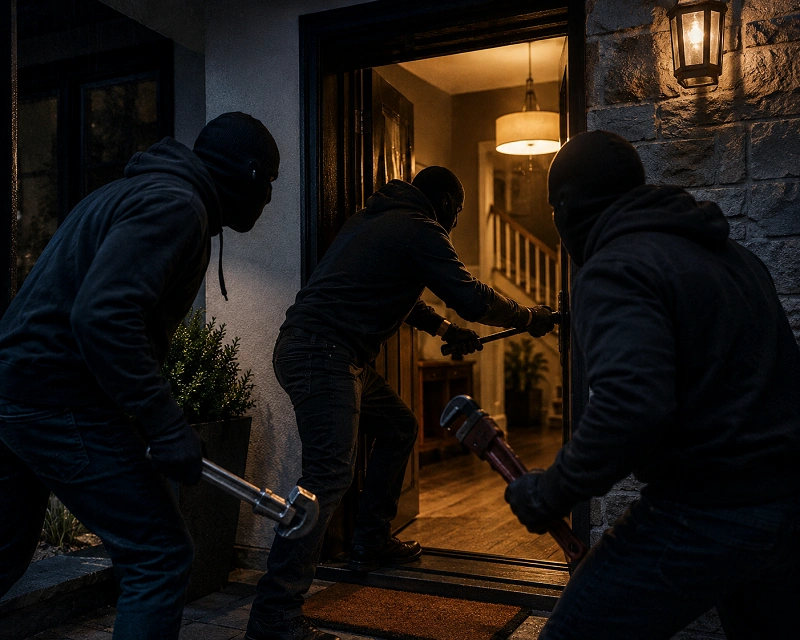
Conclusion
Wrench attacks are a reminder that Bitcoin and crypto security has entered a new phase – what many Bitcoiners feared would come 15 years ago has turned into a devastating reality for a growing number of victims.
For years, the main threat came from screens – phishing links, malware, exchange hacks and online scams. That world still exists and the threat vectors keep becoming more sophisticated and numerous, as our regular reporting on this front shows.
But as more wealth moves into Bitcoin and crypto, organized violent criminal groups are becoming more targeted, more professional, and more willing to use physical coercion where they believe it will pay off.
Crypto gives users a level of financial control that has never existed before. But at the same time, it also puts the responsibility of protecting those assets completely on the owner.
Security is therefore no longer only about buying a hardware wallet, backing up a seed phrase or avoiding phishing links. Once meaningful amounts of money are involved, operational security, privacy, and personal safety begin to matter just as much.
The good news: most failures are avoidable.
Good custody structure, compartmentalization, privacy hygiene, and realistic threat modeling dramatically reduce risk.
The earlier these habits are built – before balances become meaningful and before personal identity becomes tied to visible crypto ownership – the better.
Harden your home and physical environment, and build the skills, routines and counter-strategies early – and make sure violence is never the shortest path to your coins.