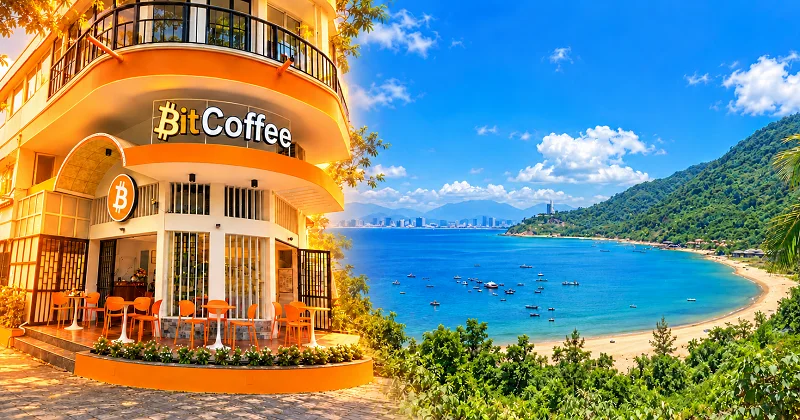
It has been a few months since ₿itCoffee Da Nang opened its doors – establishing Vietnam’s first true physical Bitcoin hub.
And we feel the name is well deserved: a place run by a committed Bitcoiner, with the Bitcoin spirit and a mindset to match. This is no mere attempt to slap the Bitcoin name or logo onto a business as a marketing ploy (we’ve seen plenty of those come and go over the years), with little substance or contribution to the ecosystem behind it.
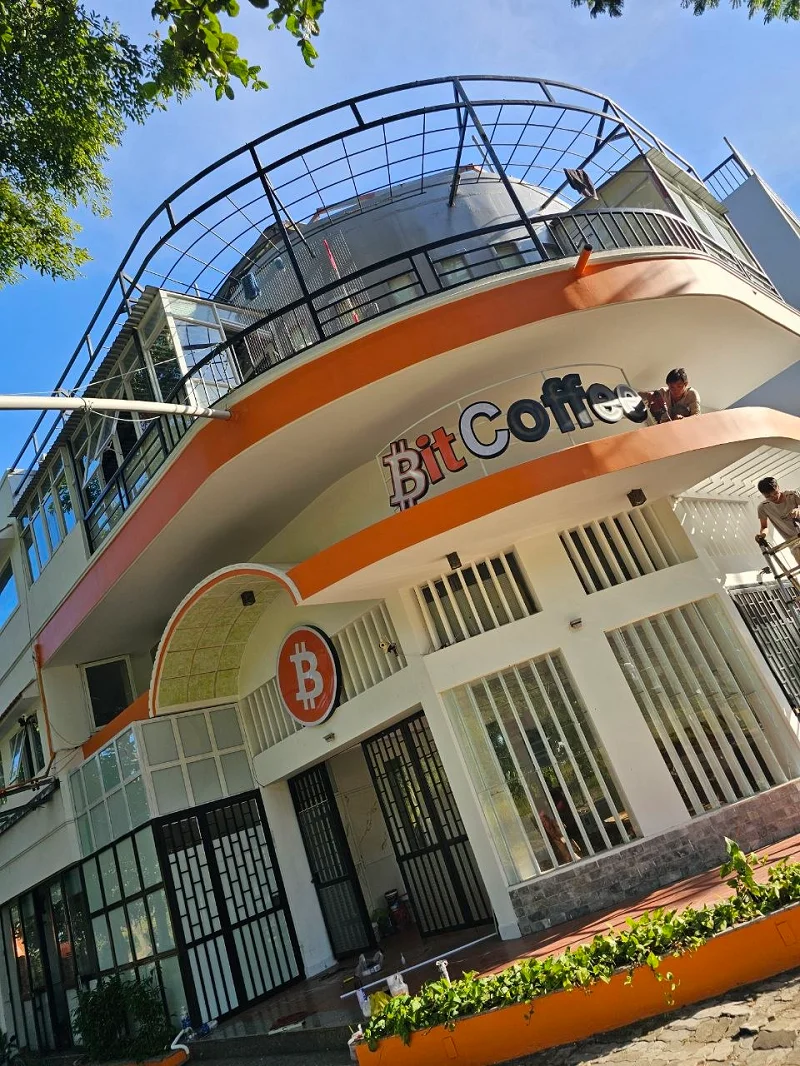
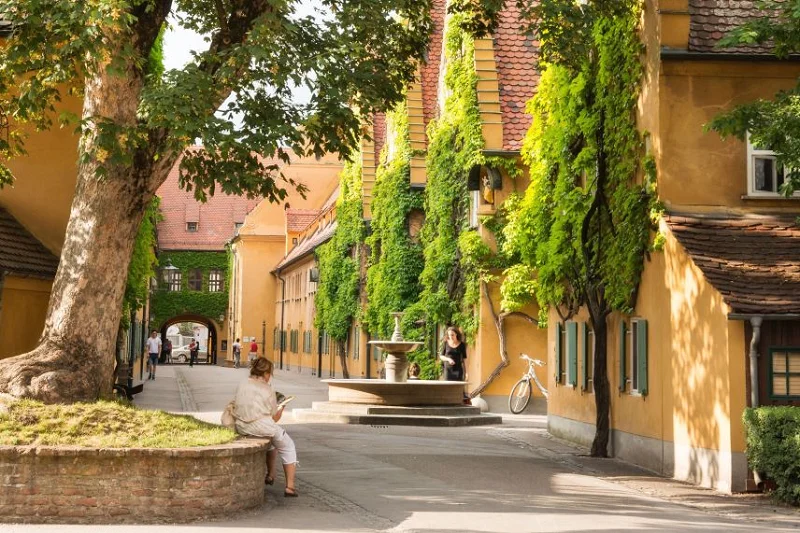
Behind ₿itCoffee is Bavarian expatriate Anton, who hails from Augsburg – a city known for industrial names such as MAN and KUKA, as well as the storied Fugger merchant family.
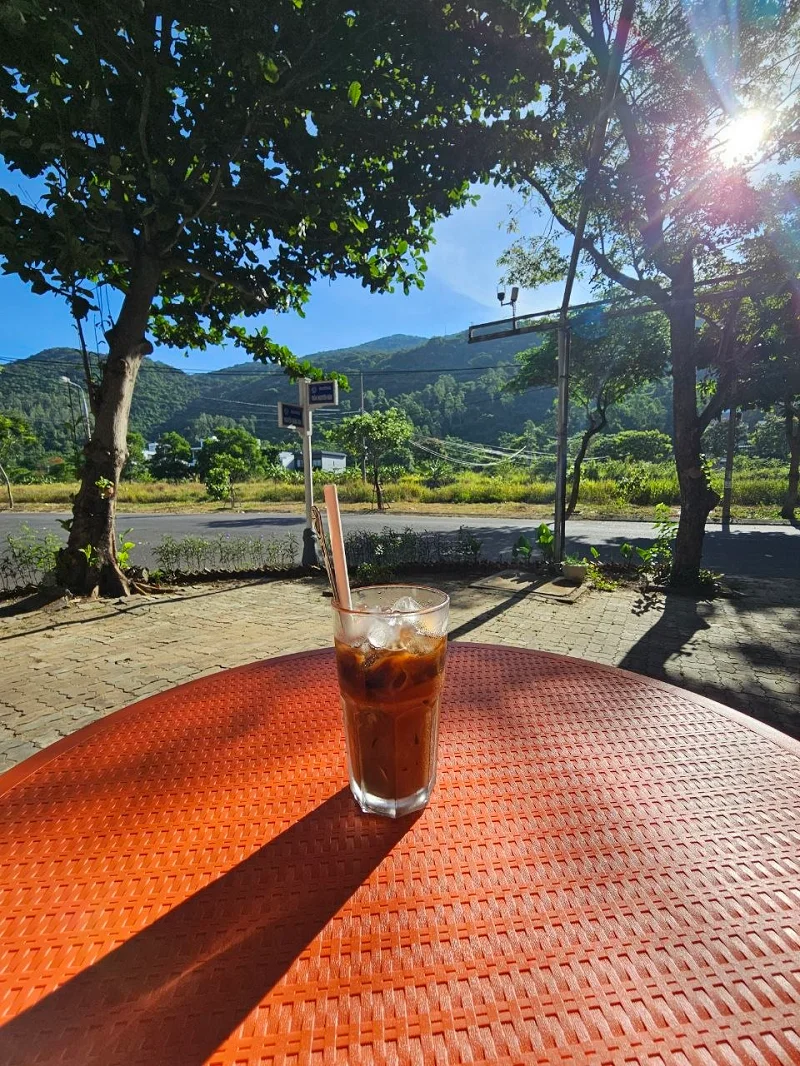
Within just a few short months, Anton and ₿itCoffee have become a core part of the Da Nang Bitcoin community, providing a space for deep conversations, shared learning and exploration of the sociocultural implications of monetary systems past, present and future – all while savouring a good cup of coffee on the city’s quiet northern outskirts.
Alongside coffee and freshly prepared meals made with locally sourced ingredients, ₿itcoffee has teamed up with our colleagues at BitcoinVN Shop to serve as their official showroom partner in Da Nang.
The partnership allows local and visiting Bitcoiners to pick up hardware wallets and other merchandise in person, without having to provide identity documents or – potentially worse from an operational security perspective – their home address. If you are taking custody of your own savings, keeping your residential address off a customer database identifying you as a hardware wallet owner is a sensible precaution.
Running your own business in a faraway country, under palm trees and near the beach, may sound like a dream escape for anyone growing weary of bleak job prospects, corporate life and government overreach back home.
But turning that dream into a functioning operational model comes with its own set of challenges.
We spoke with Anton about what he has learned along the way, the Bitcoin community taking shape in Da Nang , and how far he intends to take it.
BV Insights: Dear Anton, thank you for your time and your willingness to talk with us! Let’s start with the “heavy stuff”: you decided to leave Germany and your career there behind.
From other conversations we have had in recent months and years, it seems that all the talk about “brain drain” and “deindustrialisation” is more than a social media phenomenon. Increasingly, highly skilled and productive members of German society are choosing to put their skills to use elsewhere.
What was the breaking point for you – and do you see any positive signs that Germany in particular, and Europe more broadly, might turn the ship around in the years to come? Or do you expect things to get worse before they get better?
Anton / ₿itcoffee:
The breaking point for me was the last federal election in Germany.
I had told myself: if they form another coalition with parties that pull in completely different directions – even though it was clear that a lot of people wanted a real change of course – then I’m done. They did it anyway. The outcome was predictable: the country is running out of money, and the next step is higher taxes and new taxes.
That hurt a lot. I’m a proud German, and it really felt like they were forcing people like me to leave.
Right now every single day still counts. I hope people in Germany find a way to push for a real course correction, because many don’t fully see what the current path means for their own lives and especially for their children’s future.
I don’t like talking about politics much. In the past, whenever I brought it up openly, the reactions were often quite harsh, and that was disappointing. I still see Germany as the engine of the EU, so a turnaround here would be important for Europe as a whole. From my perspective, if nothing changes in the coming months, it will get harder to reverse the situation.
BV Insights: You chose Vietnam as your new home – why? Of all the places in the world, what made it the most compelling choice for you to settle down and put your skills and productive capacity to work? What kind of person do you think would thrive in Vietnam – and who might find it the wrong fit?
Anton / ₿itcoffee:
I didn’t do a long research about where to move. For a long time I always thought I would go to Thailand.
In life I often just follow what feels right. If it stops feeling good, I adjust or change direction. So far that has worked pretty well for me.
Last year the Vietnamese currency dropped quite a bit against the Euro, so everything was suddenly around 30% cheaper for me as a Euro holder. I thought: I haven’t been to Vietnam in many years, let’s just go and check it out.
After that holiday I already fell in love with Da Nang. The package you get here is almost perfect for how I want to live long-term – safe, affordable, great weather almost all year, and nature, beach, city, mountains and the airport all within easy reach.
Because Da Nang is so diverse, it’s almost a place for everyone – except if you really don’t like the sun. The numbers show that a lot of people have discovered it: overnight visitors rose from about 8.2 million in 2023 to nearly 10.9 million in 2024 (+33%) and then to over 17.3 million in 2025 (+15%, also helped by the merger with Quang Nam). International guests grew even faster, from over 4.1 million in 2024 to more than 7.6 million in 2025. In the restaurant I already meet guests from all kinds of backgrounds, ages and places in the world.
BV Insights: What do you think is the biggest misconception people in Europe have about life in Asia in general, and Vietnam in particular?
Anton / ₿itcoffee:
I think many people in Europe are scared of the food and the language barrier.
They imagine that the food is always super spicy or weird, or that you can’t get anything you know. And they think you can’t communicate at all if you don’t speak the local language.
From my experience that’s not really true. Yes, the food is different and there are new things, but you also find a lot of normal options, and you get used to it quickly. And with English, Google Translate and the friendliness of people here, the language barrier is much smaller than most people expect.
A lot of people also have a strange feeling because Vietnam has a communist system. Many are completely misinformed and don’t know how good the infrastructure actually is, or how well the hospitals are equipped.
I usually try to avoid hospitals as much as possible – in the past I always associated them with long waiting times and bad treatment in Germany. Here I already had to go to the hospital once, and I was more than positively surprised by the technology, how they treat you, and the prices. Doesn’t mean I suddenly enjoy visiting hospitals though.
BV Insights: Let’s turn to our shared passion: the emergence of Bitcoin as a neutral, censorship-resistant alternative to today’s centralised monetary system.
When did you first become interested in Bitcoin – and when and how did it really “click” for you, inspiring you to devote more time to it and give back to the community?
Anton / ₿itcoffee:
In 2021 I met a guy who was absolutely obsessed with talking about Bitcoin. He always said it’s still the beginning because it’s just the beginning and it’s limited.
After that conversation I started looking a bit into Bitcoin and the crypto space. I was never really looking for investments, but the system kind of forces you to take some risks and put money into ETFs, stocks or gold – whatever – because you can feel how the value of your money is disappearing. I never liked spending time on all that, but it felt necessary.
At that time I had to go to China for business and got locked in a hotel in Shanghai for two weeks of quarantine. In front of my window was just the wall of the next building – no view at all. I had a lot of time. I kept wondering why the stock market was still going up while the whole world seemed to stand still.
So I started reading more and more about the financial system and about Bitcoin. I think it was the quarantine and the whole Covid situation that felt so unreal – you start looking for answers. That’s when it really clicked for me.
After that I was pretty much alone on my Bitcoin journey down the rabbit hole. First I had to help myself. Because of the situation in Germany in the last few years, I knew I had to change something, so I started thinking about how to continue. That’s how the idea for ₿itCoffee came up.
On one hand, AI still can’t fully replace a restaurant – even if I already picture Optimus walking around in ₿itCoffee someday. On the other hand, I wanted to pay more attention to my health and eat better. And since I was often alone with my thoughts and had no one around me to talk about Bitcoin with, I thought there must be others who would be happy to have a place where you can be sure that the same values are shared. So I decided to create exactly that – a relaxed spot in Da Nang where people can just come, have coffee and food, and learn about Bitcoin for free.
BV Insights: How did the idea for ₿itcoffee as a physical hub for Bitcoiners come about? And how quickly did you go from the initial idea to opening your doors?
Anton / ₿itcoffee:
Mostly I already touched on this in the previous question. After the last election in Germany I knew a big change was coming – a new chapter in life. It wasn’t really clear yet how it would look.
A clearer picture of ₿itCoffee only started to form around beginning of this year. Like I said before, there are usually just rough ideas. You follow what feels right, work on it, think about it, and slowly the ideas get more shape and the details become clearer.
Once I made the decision to make ₿itCoffee real, I just followed my feeling of what I would expect from a place with this name – and then I made it happen.
BV Insights: Operating a physical space is often harder than it might seem initially – what were some unexpected challenges you were faced with?
Anton / ₿itcoffee:
The only real challenge I have right now is getting more customers 🙂
To be honest, in the beginning I expected to cover my costs latest after three months once I had enough customers, but it’s not like that. I have to do more advertising so people appreciate the work and the healthy food at affordable prices.
Latest when the park on the other side of the street is finished, there should be enough customers to cover the costs. I also have some other ideas to attract more people. Stay tuned, the third floor will open soon.
BV Insights: The organised Bitcoin community in Da Nang has seen a rapid upswing in activity and cohesion this year. How have things gone so far, what are your hopes for the community’s development, and how can people contribute?
What lessons have you learned along the way – particularly about what community organisers need to look out for to keep the quality of interactions high and the group cohesive?
Anton / ₿itcoffee:
So far the Bitcoin community in Da Nang has been growing nicely. My hope is that it stays relaxed and high quality. The Meetup should be a place where people can talk openly about Bitcoin, freedom and self-sovereignty without drama. I want it to keep growing organically, not forced.
People can support simply by showing up, bringing good energy, or sharing what they know. One thing I’ve learned is that you have to be careful with the vibe. If you let everyone in without any filter, the quality of the talks can drop quickly and the group loses its togetherness. It’s better to keep the focus on people who actually share the same values and want to learn, rather than just chasing numbers.
BV Insights: You also teamed up with our colleagues at BitcoinVN Shop to offer Bitcoiners a more private way to buy hardware wallets in person – keeping sensitive personal information out of centralised customer databases, where it could be stolen or exploited by threat actors.
It has been a difficult year for hardware wallet security, with the Coldcard seed-generation exploit and, more recently, reports of tampered Ledger devices sold through Malaysian reseller CryptoBilis.
Yet without a sufficient number of Bitcoiners keeping the vast majority of coins in self-custody, Bitcoin as an experiment will have failed – becoming just another custodial paper asset like so many others.
What can we do as a community to make self-custody both more widely adopted and more secure – and which approaches do you think are the most promising?
Anton / ₿itcoffee:
Yes, we teamed up with BitcoinVN Shop so people can buy hardware wallets in person in a more private way. No database that collects your data.
This year showed how important it is to stay careful. It’s a reminder that you can’t just trust everything blindly.
I think the most important thing is education and making self-custody as easy and normal as possible. Most people are still scared of it or think it’s too complicated. Places like meetups or ₿itCoffee, where you can ask questions in a relaxed way, help a lot.
In the end everyone has to decide for themselves what the right way is. I can only show some scenarios and talk about the benefits and downsides of the different ways to take care of your Bitcoin. The benefits of self-custody are the most important, but at the end everyone should make their own decision, and you can always adjust later.
BV Insights: What’s next on the roadmap for ₿itcoffee? What are your priorities for the coming months, and what is your longer-term vision for the business and its role in the Bitcoin community – both in Vietnam and across the wider East and Southeast Asian region? And how can people support you in making this vision a reality?
Anton / ₿itCoffee:
The journey of ₿itCoffee just started. I have so many ideas and something inside me says do it all at once, but I think it’s smarter that ₿itCoffee grows slowly. People need time to build trust.
The next priority is to make ₿itCoffee a place for everyone. That’s why we are renovating and will open the 3rd floor soon. There will be more space to enjoy the food and coffee, plus some co-working space and a podcast streaming room. This is the next step to make ₿itCoffee more attractive to more people. More steps will follow later. ₿itCoffee will be a place for everyone.
When you ask about the long-term vision, I see 100 ₿itCoffees in 10 years.
People can support by visiting ₿itCoffee and sharing the content on all platforms. It should go viral. Every bit of social media income goes directly into ₿itCoffee and into building more of them. I’m sure I will find Bitcoiners all over the world who want to start a business but don’t know yet which one. Running a small café is easy and you can educate other people about Bitcoin.
₿itCoffee will be a place where everyone knows you won’t get scammed – it’s a place of quality. To show the world that I’m serious I will be very transparent with the income and what happens with it. Later I also plan that the community can decide which project has more priority to make it real.
BV Insights: Of course, we encourage people to visit you directly at ₿itcoffee should they make their way to Da Nang. However, where else can people meet you in the coming months? Are there any upcoming Bitcoin events or conferences you’re planning to attend where readers could catch up with you in person?
Anton / ₿itCoffee:
I would love to visit more conferences and meetups, but first ₿itCoffee has to become profitable. Right now it’s not.
I think latest in May 2027 ₿itCoffee won’t need me anymore. I hope by that time I’m already on the way to open the next one somewhere in the world.
₿itCoffee is for everyone. Bitcoiners all over the world can open a ₿itCoffee and copy the concept. You can call it an open-source franchise. If someone opens one with bad habits – just to make profit and sell bad quality food or something else – social media will be strong enough that it only takes a short time to spread the information that it’s a fake ₿itCoffee. The market will decide…
Follow ₿itcoffee on Twitter/X or Instagram – and, better still, pay Anton a visit for a coffee and some good Bitcoin conversation:
₿itcoffee
1 Nguyễn Đăng Giai, Sơn Trà, Da Nang, Vietnam
Find ₿itcoffee on Google Maps