

























For a long time, the relationship between early “Internet money” pioneers of PayPal and Bitcoin in particular – and the wider cryptocurrency landscape in general – has not always been an easy one.
PayPal originally set out with the vision of enabling fast, borderless digital payments on the internet at a time when online commerce was still in its infancy. While the company succeeded in becoming one of the dominant global payment processors, this ambition for an open, permissionless monetary system was gradually constrained by the realities of operating within the traditional financial system – including regulatory pressure, banking dependencies, and centralized control over accounts and transactions.
As Bitcoin emerged in the aftermath of the 2008 financial crisis, it addressed many of the structural limitations that legacy payment networks could not: censorship resistance, self-custody, and settlement without reliance on trusted intermediaries. Unsurprisingly, this positioned Bitcoin not as a natural extension of PayPal’s model, but rather as a parallel – and in many ways competing – approach to digital money.
Over the years, PayPal’s stance toward Bitcoin and cryptocurrencies has evolved. From early skepticism and account restrictions related to crypto activity, the company has gradually moved toward limited integration, acknowledging both user demand and the growing role of digital assets in global finance – albeit within a tightly controlled and custodial framework.
With this context in mind, BitcoinVN now supports PayPal USD (PYUSD) on its Instant Swap Service, providing users with an additional on- and off-ramp option while maintaining clear distinctions between custodial fiat-linked instruments and open, self-custodial digital assets like Bitcoin.

Want to instantly swap fiat into precious Bitcoin? You can, via the BitcoinVN instant swap platform
As always, users are encouraged to understand the trade-offs involved: while stablecoins and payment-network-issued tokens may offer convenience and short-term utility, they operate under very different assumptions than Bitcoin’s trust-minimized and censorship-resistant design.
And while PayPal, alongside the rise of the internet and early platform winners such as eBay, secured a dominant early position in the “moving money online” space, its leadership was acutely aware of the fundamental challenge cryptocurrencies posed to its intermediary-based business model if widely adopted. As a result, a decisive and public endorsement of Bitcoin was notably absent throughout Bitcoin’s first decade – and the proliferation of its various imitators.
This skepticism was at times expressed explicitly. Former PayPal CEO Bill Harris went as far as calling Bitcoin “the greatest scam in history” – a reaction that, in hindsight, reflected the discomfort of a financial intermediary confronted with a technology enabling direct value transfer without the need for trusted middlemen.

PayPal, the pioneering “internet money” company which counted early figures such as Elon Musk and Peter Thiel among its founders – individuals who have since remained domineering forces across Western politics, business, and industrial manufacturing – has long understood the implications cryptocurrency could have for its core business.

However, with ground-shifting changes taking place in the United States over the past year, PayPal has decided to go full bore.
Is PayPal aligned with the original “crypto ethos”?
Probably not.
Is PayPal’s entry into the stablecoin game inevitable?
Pretty much so.
As such, PayPal has launched its own stablecoin – giving its vast user base the ability to move value outside the tightly walled garden that is PayPal, while at the same time attempting to secure a slice of the extremely profitable stablecoin business that issuers such as Tether and Circle have built over the past decade.
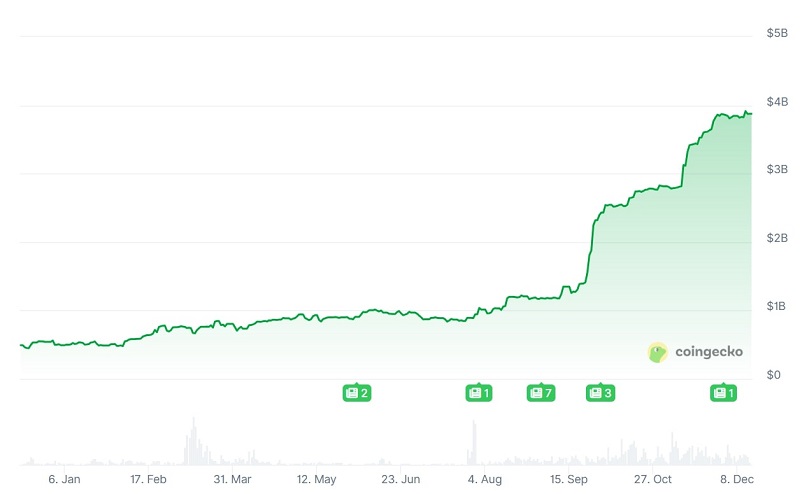
Since the launch of PayPal USD (PYUSD) in the summer of 2023, it has rapidly established itself among the global top USD stablecoins, reaching a market capitalization of close to USD 4 billion at the time of writing – roughly an order of magnitude larger than the biggest EUR-denominated stablecoin to date, Circle’s EURC.

In practice, PYUSD is primarily used as a USD-denominated settlement and transfer instrument within supported wallets, exchanges, and on-chain environments — allowing users to move dollar-linked value without relying on traditional banking rails for every transaction.
Typical use cases include short-term parking of funds between trades, faster cross-platform transfers, and as a bridge asset between fiat systems and on-chain activity. At the same time, PayPal has been steadily expanding PYUSD’s reach beyond its own platform, integrating it with major blockchain networks and select third-party services, signaling a broader push to embed PYUSD into existing crypto market infrastructure.
Currently the BitcoinVN Instant Swap platform enables PayPal USD on the Ethereum, Solana and Arbitrium Network.
Will PayPal rug me? PYUSD and depeg risk
If you decide to keep your on-chain dollars backed by an old-school fintech like PayPal, rather than the “dodgy Italians” of market leader Tether (or perhaps you simply hate Juventus Turin – not our call, but if you take football seriously and have skin in the game, an understandable position!), or Circle because you prefer a different shade of blue for your digital dollars, then PYUSD may feel like the more familiar choice.

While this is not a recommendation, PYUSD currently appears to carry a relatively low depeg risk. Given PayPal’s long operating history, regulatory exposure, and the reputational damage such an event would cause to its core business, it is difficult to imagine a scenario in which PYUSD’s backing were to disappear suddenly or without significant prior warning.
That said, as with all issuer-backed stablecoins, PYUSD ultimately remains dependent on the issuer’s solvency, governance, and regulatory environment – risks that cannot be fully eliminated, only assessed and managed.
Build on the BitcoinVN API
For developers, builders, and businesses looking to integrate PayPal USD (PYUSD) into their own products or workflows, BitcoinVN also provides a simple and robust Instant Swap API. The API allows programmatic access to PYUSD liquidity across supported networks, enabling automated swaps, treasury operations, settlement flows, and payment integrations without having to manage multiple on-chain connections or counterparties. This makes it suitable for exchanges, wallets, fintech applications, and merchants seeking a streamlined way to interact with PYUSD as part of a broader digital-asset stack.
Earn Yield on PayPal USD?
BitcoinVN has recently launched a unified USD stablecoin liquidity vault, allowing users to park supported USD-denominated stablecoins – including PayPal USD (PYUSD) – in exchange for a share of the platform’s swap fee revenue generated by the underlying assets.
While this vault structure is still relatively new at the time of writing, further updates and refinements are planned. Additional announcements will follow in the coming weeks, and readers are encouraged to keep an eye on upcoming BitcoinVN articles for the latest developments.
Looking for ways to maximize your Yield on the staked USD? This article has got you covered.
Secure your PayPal USD
While you are probably aware by now that, as with any issuer-backed asset, you ultimately remain at the mercy of the issuer not to freeze your funds, it is still – especially when dealing with more than pocket change – essential to follow best practices to prevent your assets from being compromised through one of the many and increasingly sophisticated malware attack vectors.
As such, using a hardware wallet is the least you could – and should – do.
PayPal USD can be secured using the common multi-coin hardware wallets from Trezor or Ledger. All currently supported networks – Solana, Ethereum, and Arbitrum – are compatible with the latest-generation devices from both European hardware wallet manufacturers.
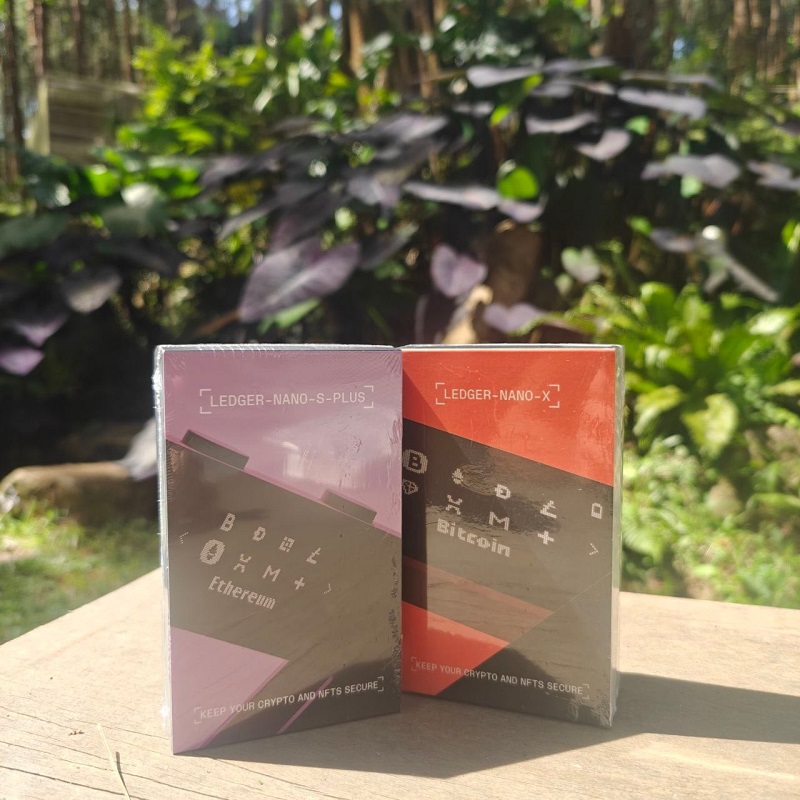
As it happens, our colleagues at BitcoinVN Shop have been an official supplier of Trezor and Ledger devices in Vietnam since 2017, offering fast shipping from our Vietnam-based warehouse with no customs hassle involved. (Link)