

























For years, detractors of Bitcoin often said it was a solution in search of a problem, arguing that Bitcoin was trying to fix something that didn’t exist. But in reality, the problem has always been there. It’s just that people have become so accustomed to it that they fail to realize the system they trust is frequently… betraying itself.
I remember when one of the main arguments against Bitcoin was that it was a “solution without a problem” that it tried to fix something that didn’t exist.
But that was never true.
The problem was there all along. Most people just couldn’t see it because they were too used to trusting systems that quietly fail them.
A friend of mine in Vietnam is learning this the hard way. He’s been working at a school for eight years. Recently, he found out the school hadn’t properly paid his taxes. Now the government says he owes the money. He’s stuck trying to sort out fines, paperwork, and bureaucracy, all because he trusted his employer to handle things legally and transparently. And why wouldn’t he? They were the ones signing the paychecks.

I’ve had my own version of that problem. In my case, I’m not sure there was malicious intent, but the end result was the same: I lost money, time, and peace of mind. And what both of these situations highlight is the same underlying truth: trust is fragile, especially when it comes to money.
The modern economy runs on trust. We trust employers to pay taxes, banks to hold deposits, governments to manage currency, and lawyers to interpret the fine print. But the more intermediaries involved, the more fragile the system becomes. Bitcoin, by design, removes that fragility. It replaces trust with verification. If an agreement is enforced by code, on-chain, transparent, and irreversible, then there’s no need for faith, only execution.
The real cost of a broken trust system isn’t just the initial mistake. It’s the cleanup. When an employer doesn’t pay taxes or a bank mishandles funds, the victim spends months or years trying to fix it. Lawyers get paid. Accountants get paid. Governments collect penalties. Stress multiplies. The money problem becomes an industry in itself.

Think about that: there’s an entire economy built around fixing errors in the money system, tax attorneys, compliance firms, regulators, collections agencies. Billions circulate each year not to create value but to correct failures of trust. That’s inefficiency on a civilizational scale.
And at the root of it is the tax system itself. In most countries, taxes are designed to be complicated. The U.S. tax code in particular favors those who can afford experts to navigate it. The wealthy and powerful helped write the rules; they also know how to bend them. The government tolerates it because the majority, ordinary workers, simply comply. They pay without question. It’s a quiet arrangement that benefits both the ruling class and the bureaucratic machine.
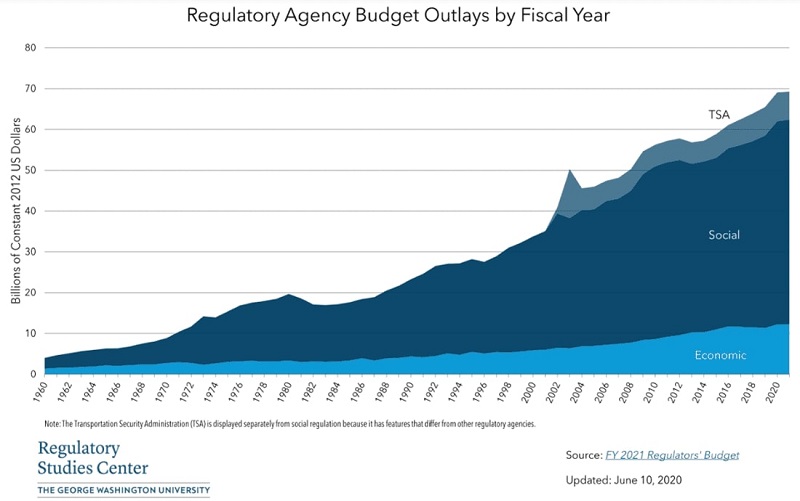
Bitcoin disrupts that equilibrium. A transparent, programmable system of value transfer could make taxation simple, direct, and incorruptible. You earn this much, you pay this much, executed automatically, verifiable by anyone. No loopholes, no games, no hidden subsidies for the rich. In that world, the purpose of law and finance shifts back to productivity rather than repair.
We’d still need lawyers and policymakers, but not armies of them dedicated to cleaning up messes caused by opaque systems. The current financial-legal complex doesn’t make society stronger; it just keeps the dysfunction profitable.
What Bitcoin offers is not just a new form of money but a new foundation of accountability. It exposes inefficiency where we’ve learned to accept it. It makes honesty cheaper than fraud.
And that’s a solution to a very old problem.
Further Reading
- Nakamoto, S. (2008). Bitcoin: A Peer-to-Peer Electronic Cash System.
- Coin Metrics. “The Cost of Trust: Settlement Assurance in Traditional vs. Bitcoin Systems.”
- BIS Working Paper No. 1095 (2023). Trust, Intermediaries, and the Future of Digital Settlement.
—
This essay was first published by Harvestr21 on Substack and has been under permission by the author translated into Vietnamese and further languages by the team of BitcoinVN News.
Liked the essay and want to read more? Tip the author here:
Lightning address: [email protected]