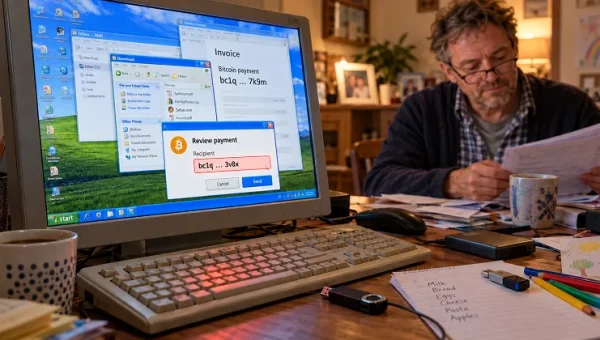
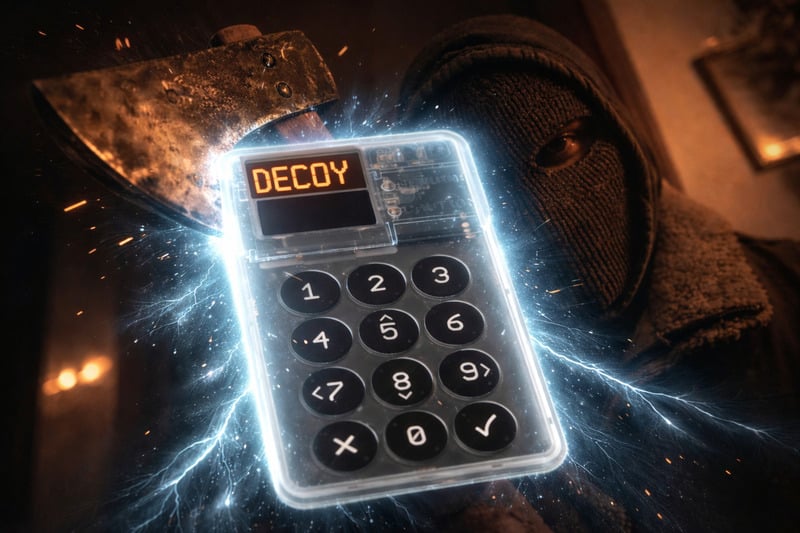
A decoy wallet is a practical security tool in the world of cryptocurrency, designed to help protect your real assets from theft, coercion, or physical threats. Unlike a standard wallet, a decoy wallet is intentionally set up to draw the attention of a threat actor – such as a thief or kinetic attacker – while your actual holdings remain safely concealed elsewhere. By appearing legitimate and containing only a small but believable balance, a decoy wallet can reduce risk and serve as an additional layer of protection in emergency situations where your digital assets are actively targeted.
How does a decoy wallet work?
A crypto decoy wallet works by presenting a second, limited wallet that appears genuine, while your larger holdings remain stored separately and out of sight. The idea is simple: if you are ever pressured to reveal “your wallet,” you can show access to a smaller balance instead of exposing your main funds.
In practice, this usually means setting up a wallet, account, or device that contains only a modest but believable amount of crypto. Your real holdings are kept in a different wallet structure, often protected by a separate passphrase, account, or backup arrangement that is not obvious to an outside observer.
The decoy wallet should look normal and functional. It must not appear empty or staged, as that could raise suspicion. Its role is to satisfy scrutiny in a high-pressure situation while reducing the chance that your primary holdings are discovered.
This approach is not about “tricking” technology, but about adding a practical layer of operational security. It works best when combined with good wallet separation, discreet backups, and careful handling of devices and recovery phrases.
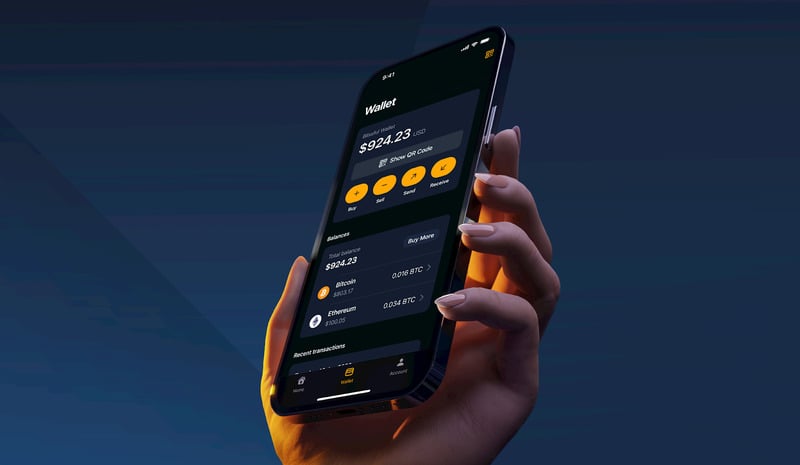
Passphrase-based decoy wallet (hidden wallet using seed + passphrase)
Most advanced hardware wallets, including Ledger, Trezor, Keystone, and COLDCARD, allow you to create a hidden wallet by adding a passphrase.
Your 12- or 24-word seed phrase creates the standard wallet. When you add a passphrase – often called the “25th word” – the device uses it to generate a completely separate wallet. By choosing different passphrases, you can create multiple hidden wallets, each separate from the standard one.
This becomes a decoy setup because the standard wallet created by the seed alone can hold only a small amount of crypto and act as the decoy, while the passphrase-protected wallet stores your real assets. If someone forces you to reveal your seed phrase, they will only see the small balance in the standard wallet and may assume that is all you have.
Pros:
- Very convincing and technically reliable
- Hidden wallet is not visible from the seed alone
- Supported by most major hardware wallet brands
Cons:
- The passphrase becomes a single point of failure: if you forget it, mistype it, or lose access to it, your real funds may be permanently lost
- The passphrase must be remembered and backed up with the same seriousness as the seed phrase
- If the passphrase is stored next to the seed phrase, the setup loses much of its security value
This setup only works if the passphrase is handled carefully. Your seed phrase alone will only restore the decoy wallet. Your real wallet requires both the seed phrase and the correct passphrase. If the passphrase is forgotten or lost, the funds in the hidden wallet are effectively gone forever.
Important caveat: A passphrase can become a serious single point of failure. If the passphrase is forgotten, lost, mistyped, or inaccessible to your heirs, the funds in the hidden wallet may be permanently lost. For larger long-term holdings or life savings, it may be safer to consider a more durable setup, such as a multi-vendor multisig arrangement, where no single device, seed phrase, or passphrase controls everything.
Duress PIN
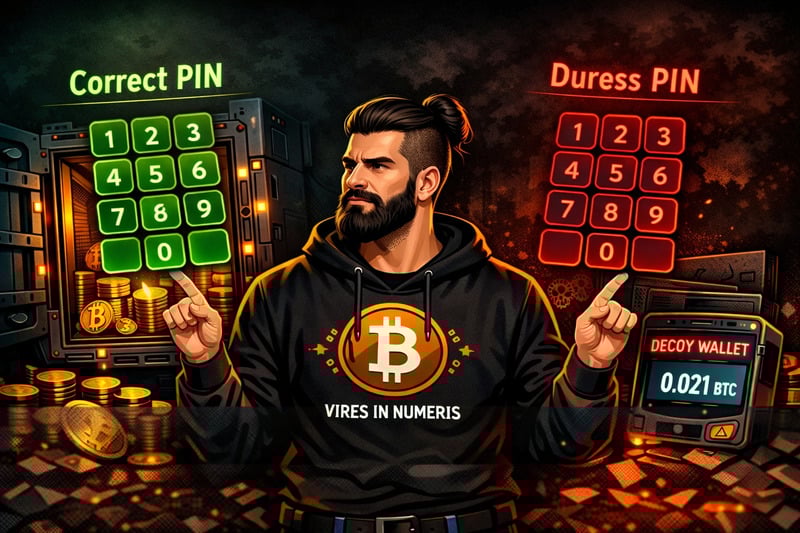
Some hardware wallets, especially COLDCARD, include a feature known as a duress PIN, panic PIN, or trick PIN. This allows you to set up an alternative PIN that performs a different action from your real PIN.
Your real PIN unlocks your main wallet. A duress PIN can be configured to open a separate duress wallet with only a small, non-critical amount of funds. To an attacker, the device still appears to unlock normally, but the wallet shown is not your main wallet.
This can be useful in a coercion scenario, where someone forces you to unlock your device. Instead of revealing access to your real holdings, the duress PIN reveals only a limited wallet designed for that situation.
However, this feature must be understood and tested carefully before relying on it. On COLDCARD, trick PINs can also be configured to trigger more destructive actions, such as wiping the seed or bricking the device. A mistake in setup can therefore lead to serious loss of access.
It is also not a replacement for proper long-term storage. For larger holdings or life savings, a more durable setup, such as multi-vendor multisig, may be safer than relying on a single device or single duress mechanism.
Other ways to create decoy wallets
Multi-wallet setup on mobile apps
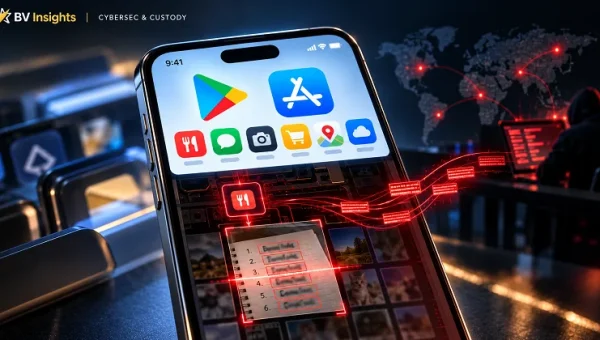
A multi-wallet setup on mobile apps is a simple way to create a basic decoy wallet without using a hardware device. Apps such as MetaMask, Trust Wallet, and Phantom allow users to create and manage multiple wallets or accounts inside the same app.
You can keep one wallet with a small, believable balance visible in the app, while your real wallet is kept separately — for example on another device, in a different wallet app, behind stronger device security, or backed up in a place only you know.
This method can be useful for small amounts and everyday use, but it should not be mistaken for strong protection. A phone is a noisy environment: apps, notifications, browser history, cloud backups, screenshots, saved passwords, wallet connection history, and transaction records may all reveal more than intended. If an attacker has time to inspect the device properly, a simple mobile decoy will likely not hold up well.
At best, this method helps in casual threat scenarios, such as random theft or a quick inspection. If you are specifically targeted based on a known target list, it is unlikely to provide meaningful protection.

For this reason, mobile decoy wallets should be treated as a convenience layer for small balances, not as a serious protection model for meaningful holdings. For larger amounts, consider stronger wallet separation, cold storage, passphrase-based setups, or a more durable multi-vendor multisig arrangement.
Multi-device separation
Multi-device separation means keeping your decoy wallet and real wallet on different devices. One device, often a cheap phone or an older but genuine hardware wallet model, contains a wallet with only a small amount of crypto. This acts as your decoy device. Your real wallet is kept on another device or hardware wallet, ideally stored offline, encrypted, and away from daily use.
If you are robbed or forced to hand over your phone or wallet device, the attacker only sees the low-value wallet on the decoy device. This can be useful for travelers, digital nomads, or anyone who wants to reduce the risk of losing meaningful funds through one compromised device.

This method can help against casual theft or random street-level threats. It should not be relied on against a targeted attacker who already knows you hold crypto. For larger balances, use a dedicated multi-vendor multisig arrangement.
Multi-signature wallets (2-of-3) with a decoy key
A hardware wallet used as one key in a 2-of-3 multisig setup can also contain a small single-signature wallet. This single-signature wallet can hold a modest, believable balance and act as the decoy. Meanwhile, the larger funds are stored in the multisig wallet, where at least two separate keys are required to move funds.
If someone forces you to unlock or hand over the device, they may see the small single-signature balance and assume that is the main wallet. Even if they discover the multisig signer, that one key alone cannot move the larger multisig funds.
Caveat: This is advanced and must be set up carefully. If the attacker understands multisig, they may realize more keys exist. Losing one real multisig key also reduces your recovery margin unless you have proper backups in place, even though the funds cannot be stolen with that key alone.
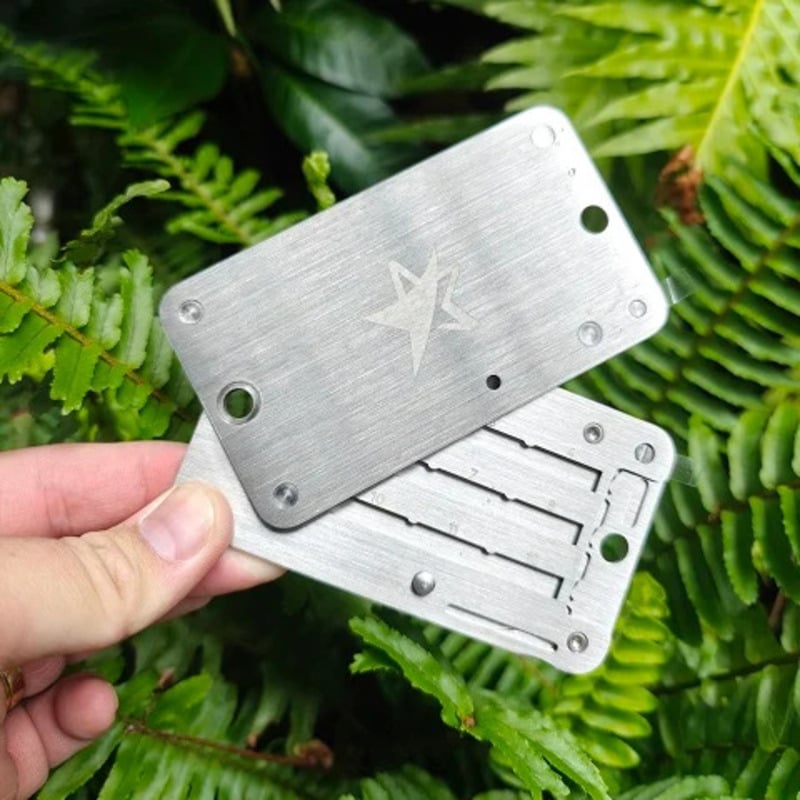
Social engineering decoys
Social engineering decoys are wallets designed to look active or financially “interesting” without containing meaningful value. Instead of holding serious funds, they may contain small amounts of crypto, random airdrops, failed meme coins, illiquid tokens, testnet assets, NFTs with no real market value, or other low-value on-chain clutter.
The goal is not technical protection, but misdirection. To a casual attacker, the wallet may look like the owner was active in crypto, but mostly lost money chasing low-quality tokens, bad trades, or worthless hype projects. In other words, the wallet tells a believable story: “there was crypto activity here, but nothing valuable remains.”
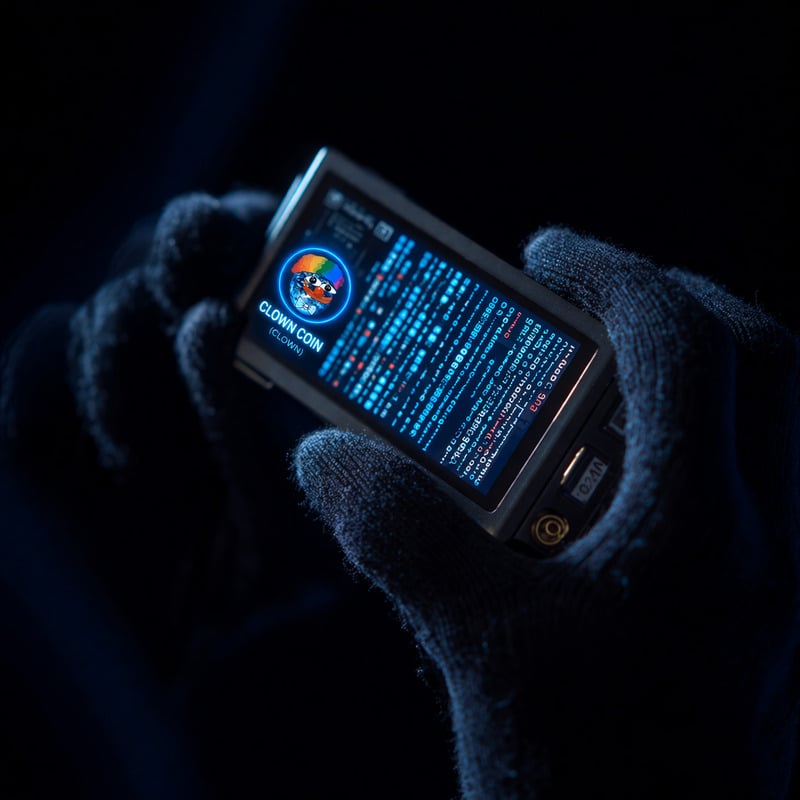
This can add a small layer of realism to a decoy setup, especially if combined with a modest balance in a real asset. However, it should not be relied on for serious protection. Anyone with basic blockchain analysis skills may quickly see that the assets are illiquid, worthless, or staged. It is only useful as a low-level distraction, not as a proper security model.
It also will not work well in a profiled attack. If the attacker already has information about you, your business, your public posts, or your likely holdings, the decoy needs to match that profile. For example, if you are publicly known as a Bitcoin-only holder, but the wallet you reveal is full of random low-quality tokens you have never mentioned and would be unlikely to own, the setup may look suspicious rather than convincing.
Best practices for safe decoy wallet setup
- Make the decoy believable: Your decoy wallet must look completely normal. Keep a realistic balance, not too small and not too large. Include common tokens like BTC or USDT instead of filling it only with junk tokens. If it is known from your social media profile, business activity, or other public footprint that you hold certain assets, the decoy should reflect that reality. This also includes data transmitted to third parties, such as exchanges, service providers, or tax authorities, since such data must be assumed to leak at some point and subsequently be abused by criminal organizations compiling target lists of high-profile holders. The goal is to make the wallet look genuine and consistent with what an attacker may already know or assume about you.
- Never store your real wallet and decoy wallet in the same place: Keep them fully separated. Use different devices, different accounts, or different seed phrases. If both wallets are stored together, an attacker could easily discover your real wallet.
- Train yourself: Under stress, you will rely on instinct. Practicing how to unlock and show your decoy wallet helps ensure you can do it smoothly and naturally in a high-pressure situation without accidentally exposing your real wallet.
- Avoid talking about your security setup: A decoy wallet only works if no one knows you’re using one. Never discuss your decoy setup with others. The fewer people know, the safer your real assets remain.
Conclusion
Decoy wallets can be a useful extra layer of protection, but they should not be mistaken for a complete security solution. Their value depends heavily on the threat model. A simple mobile decoy may help against random theft or casual inspection, but it is unlikely to protect you against a targeted attacker who already knows or suspects that you hold significant crypto assets.
A good decoy wallet must look believable. It should contain a realistic balance, use assets that make sense for your public profile, and avoid looking obviously staged. If the decoy does not match what an attacker already knows about you, it may create more suspicion instead of reducing risk.
For serious holdings, decoy wallets should only be one small part of a broader security setup. Long-term savings are better protected through proper cold storage, careful wallet separation, and – for larger amounts – durable multi-vendor multisig arrangements. The goal is not to rely on tricks, but to reduce single points of failure and avoid exposing your real assets under pressure.
Need a genuine secondary device for a decoy wallet setup?
BitcoinVN Shop offers selected older-generation hardware wallets that can serve well as secondary or decoy devices – genuine, functional, and available at a lower cost than the latest flagship models.